
Apple executives didn’t offer a clear explanation for Siri’s AI shortcomings — but they don’t really need to.
If Apple’s WWDC 2025 felt a bit underwhelming on the AI front, you’re not imagining things. While rivals like Google used their I/O keynote to unveil a rapid-fire stream of Gemini updates — from new models to video generation tools — Apple opted for a more measured rollout. This year’s highlights included a new AI-powered health coach, Visual Intelligence for more agentic, multimodal screen awareness, and of course, the debut of Genmoji. Notably absent? The long-promised AI overhaul of Siri — once pitched as a cornerstone of Apple Intelligence — which still hasn’t materialized after missing its expected launch last year.
If you’ve been following the story, you probably noticed that Siri’s AI-powered upgrade still hasn’t launched. Apple has quietly delayed the rollout, leading some to question whether it truly has the chops to compete in the fast-moving world of AI chatbots, large language models, and generative tools for images and video. While Apple likely would’ve preferred to sidestep those doubts altogether, its executives couldn’t leave this year’s developer conference without addressing the increasingly obvious AI elephant in the room.
In a conversation with The Wall Street Journal, Apple’s Senior VP of Software Engineering, Craig Federighi, said, “We want to do this the right way.” But when pressed on when exactly that “right way” might arrive, his response was more cautious: “We want to make sure we have it very much in hand before we start talking about dates, for obvious reasons.” Sensible. A bit late for that stance, perhaps — but still, sensible. It’s clear Apple is feeling the heat to roll out AI features under its Apple Intelligence banner. That’s no surprise, given the explosion of hype (and investment) around AI. What’s more interesting, though, isn’t the pressure itself — it’s where that pressure is coming from.
As I noted ahead of WWDC, much of Apple’s struggle with Siri—and its broader AI lag—is more about optics than actual impact. Most consumers still don’t actively care about AI features, which means Apple probably doesn’t either—at least not enough to rush anything out the door. Not that Apple doesn’t care at all; it’s just being strategic. But for the sake of appearances, it can’t exactly say that. Even if the average user isn’t demanding AI just yet, investors are paying close attention. That’s likely part of why Apple’s stock dipped right after a keynote that felt relatively light on AI.
The reality is this: AI may be on Apple’s roadmap, but it isn’t yet the make-or-break feature for selling iPhones. Call me a skeptic, but I doubt Siri’s AI upgrade will be what drives most people to upgrade this year. It’ll be the new camera. Or the thinner design. Or simply the need for a new phone and an unwillingness to get green-bubbled into social exile. If Apple is going to make a serious AI push in the near term, it won’t be because of hype cycles or shareholder pressure—it’ll be because everyday users finally start to care.
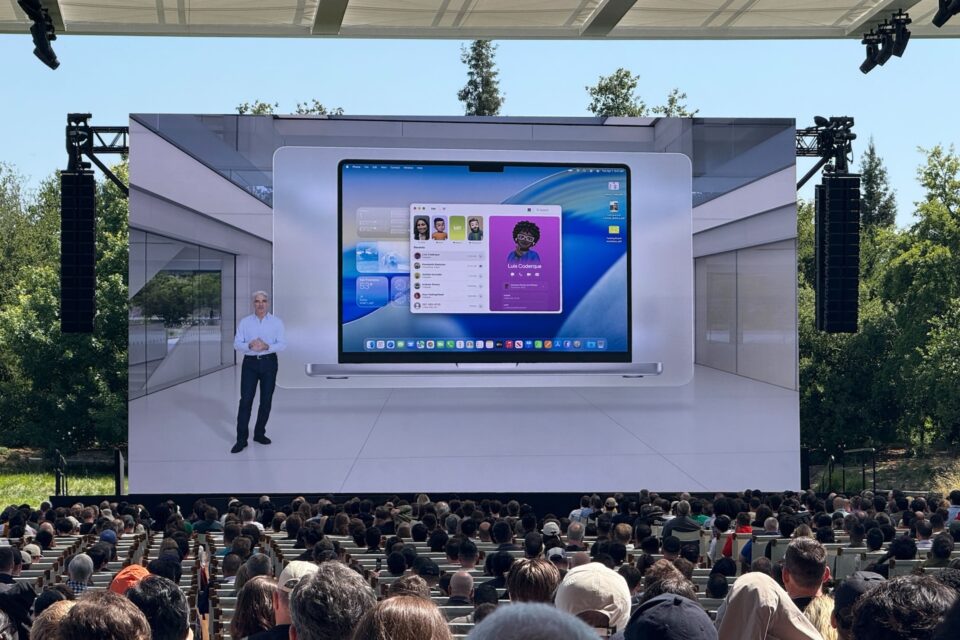
“When we started with Apple Intelligence, we were very clear: this wasn’t just about building a chatbot.” That’s how Craig Federighi framed it. So when some of the anticipated Siri capabilities didn’t show up, people naturally asked, “What happened, Apple? Where’s your chatbot?” But, as Federighi reiterated, that was never the point — and still isn’t the primary goal.
That could sound like spin or a convenient excuse, sure. But in this case, I’m inclined to give Federighi the benefit of the doubt. Apple has a history of playing the long game successfully. Its polish may have dulled a bit over the years, but its “wait-and-see” approach has worked before — just look at the Apple Watch. Entering late has often played to Apple’s advantage, and AI might be another space where that strategy pays off.
Yes, Google and Samsung are loading up on AI features. But whether those features are truly useful is still up for debate. Outside of maybe Circle to Search, it’s hard to point to anything that feels like a clear leap forward — let alone the dawn of an AI revolution.https://gizmodo.com/circle-to-search-great-samsung-galaxy-s24-android-1851207246
Maybe Apple’s slower, more deliberate path will result in AI features that actually matter. Or maybe “AI phones” will prove to be just another tech fad, and Apple will be vindicated for not throwing everything behind a trend that fizzled out. It’s too early to say where AI is really heading. But one thing’s for sure: you can’t count Apple out. Not prioritizing speed might mean fewer flashy announcements, but it could also mean more features people actually use.