
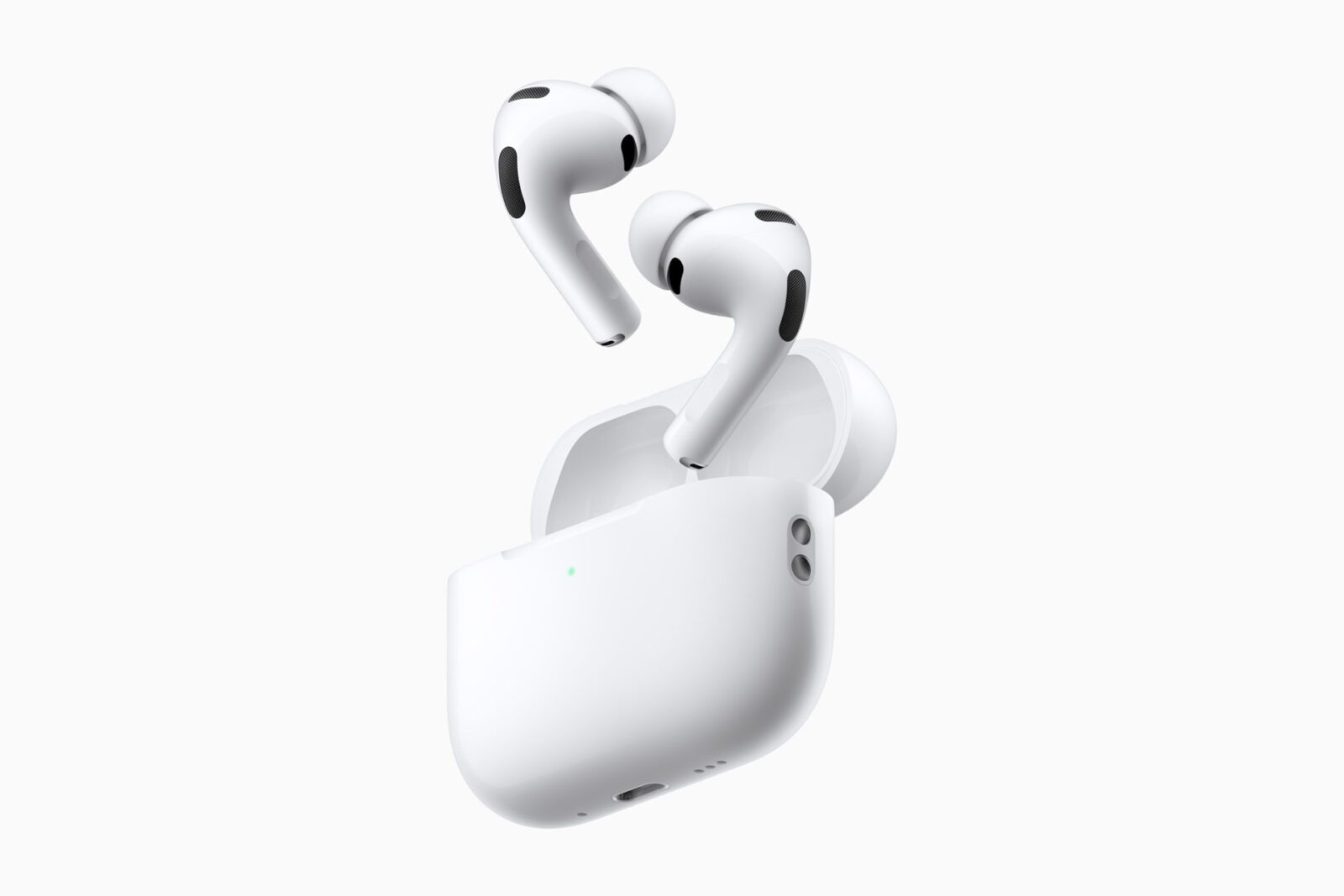
After years of rumors and leaks, Apple’s AirPods Pro 3 have finally arrived—and at first glance, they appear to justify the long wait. While we haven’t gone hands-on with them just yet, Apple’s latest premium earbuds bring notable hardware upgrades, fresh features, and meaningful performance improvements that build on the already-strong foundation of their predecessor.
The second-generation AirPods Pro, which Apple refreshed in 2023 with USB-C connectivity and a handful of incremental tweaks, set a high bar for wireless earbuds. Now, the third generation takes things a step further, promising better audio quality, smarter noise cancellation, and enhanced integration with Apple’s ecosystem.
If you’re considering an upgrade—or buying your first pair—you’re likely asking the big question: should you rush to grab the AirPods Pro 3, or stick with the AirPods Pro 2? Before making that decision, it’s worth breaking down exactly what Apple has changed, what’s improved, and whether those updates are compelling enough to justify the jump.
Luckily, we’re here to give you a categorical breakdown that shows all of this year’s improvements and what’s the same as the AirPods Pro 2. Have at it, folks.

When it comes to AirPods Pro, active noise cancellation (ANC) has always been one of the defining features—and with the third generation, Apple is doubling down on making it even better. Recognizing how critical ANC is to the overall listening experience, Apple says it reengineered both the hardware and software to push noise reduction further than ever before.
According to the company, the AirPods Pro 3 leverage ultra-low-noise microphones paired with advanced computational audio algorithms to deliver twice the ANC performance of the AirPods Pro 2. In practical terms, that’s a fourfold improvement compared to the original AirPods Pro launched in 2019.
But Apple didn’t stop at active noise cancellation. The new model also enhances passive noise isolation through redesigned ear tips made with memory foam inserts. These tips are designed to create a tighter, more adaptive seal in the ear canal, helping block out ambient sound even before ANC kicks in. Together, the improvements aim to give users a noticeably quieter, more immersive experience whether they’re commuting, flying, or working in noisy environments.
Apple also emphasized that these upgrades should benefit Transparency Mode, allowing users to hear the outside world more clearly when needed while maintaining the comfort of long listening sessions. The result, on paper, is a headset that not only outperforms its predecessors but could set a new bar for premium wireless earbuds.Apple doesn’t provide specific numbers for how many dBs are cancelled by its earbuds, but from the sounds of it, AirPods Pro 3 should excel in the ANC department and maybe even give Bose’s QuietComfort Ultra earbuds (my favorite buds for ANC) a run for their money.

I haven’t had the chance to test the AirPods Pro 3 firsthand just yet, but Apple is making some bold claims about how they stack up against the AirPods Pro 2. At the core of these improvements is a reworked internal design that Apple says fundamentally changes the way sound is delivered.
The new earbuds feature what Apple calls a “multiport acoustic architecture,” which is engineered to optimize airflow and refine how audio is transmitted from the drivers into the ear. This isn’t just marketing language—by controlling airflow more precisely, the earbuds can reduce distortion and maintain clarity even at higher volumes.
Apple has paired this with an upgraded Adaptive EQ system that automatically fine-tunes frequencies in real time based on the listener’s ear shape and fit. The company claims this results in tighter, more powerful bass, smoother mids, and a wider, more immersive soundstage than in previous generations. In theory, this should make everything from music and movies to podcasts feel richer and more dynamic.
On paper, these changes suggest that the AirPods Pro 3 could be Apple’s best-sounding earbuds to date, addressing one of the most consistent requests from audiophiles who have long wanted AirPods to compete more directly with high-end competitors like Sony and Bose. Still, while the specs are promising, the true test will come with hands-on listening to see if these architectural tweaks translate into a noticeably better experience in real-world use.
Battery Life: Longer Listening, Fewer Charges
Battery life is one of the most critical metrics for any pair of wireless earbuds, and with the AirPods Pro 3, Apple has made a significant leap forward. According to Apple, the new generation now delivers up to 8 hours of playback with active noise cancellation (ANC) enabled, compared to just 6 hours on the AirPods Pro 2. That’s a 33% improvement, and in real-world terms, it could mean finishing an entire long-haul flight without having to recharge.
Turn ANC off and switch to Transparency Mode, and battery life stretches even further—up to 10 hours of continuous playback on a single charge. This places the AirPods Pro 3 ahead not just of Apple’s previous model, but also of much of the competition, where 6 hours with ANC on remains the industry average for premium earbuds. Simply put, there’s no subjectivity here: more battery life means less charging, and that’s always a win.
Of course, the charging case adds more juice on top of that, with Apple claiming up to 40 hours of total listening time before needing to plug in. Wireless charging, MagSafe compatibility, and fast-charging support (around an hour of playback from just five minutes in the case) all return, making the AirPods Pro 3 one of the most reliable earbuds for users who live on the go.
Features: Where AirPods Pro 3 Pull Ahead
If battery life is a nice quality-of-life upgrade, features are where the AirPods Pro 3 really begin to outpace the AirPods Pro 2.
The headline addition is health tracking. Thanks to new infrared (IR) sensors, combined with the existing accelerometer, gyroscope, and GPS, the AirPods Pro 3 can now measure heart rate, calories burned, and other fitness metrics directly from your ears. These metrics integrate seamlessly with Apple Fitness+, letting users see real-time stats during workouts without needing a separate wearable. Unlike competing earbuds, these metrics run in the background while you listen to music, making workouts more engaging and convenient.
Another standout feature is Live Translation. As the name suggests, the AirPods Pro 3 can translate speech in real time, letting you hold conversations across languages. Apple’s clever implementation uses ANC to gently reduce the speaker’s voice so you can clearly hear the translation piped directly into your earbuds. Currently, it supports English, French, German, Portuguese, and Spanish, with Italian, Japanese, Korean, and Chinese in development. Even in its beta state, this feature highlights how Apple is pushing earbuds beyond music and phone calls into powerful, everyday productivity tools.
Beyond these exclusives, the AirPods Pro 3 still deliver everything the AirPods Pro 2 are known for: adaptive ANC, Transparency Mode, personalized hearing tests, and seamless iOS integration. But with health monitoring and Live Translation, Apple is adding two capabilities that position the AirPods Pro 3 as much more than just headphones—they’re starting to look like a hybrid between earbuds and wearable health devices.
Comfort: Designed to Fit More Ears, Better
Comfort is another key category, especially for earbuds you’ll wear during workouts, calls, and long listening sessions. Here again, Apple claims to have made real improvements with the AirPods Pro 3.
According to Apple, the company conducted over 10,000 ear scans and logged more than 100,000 hours of user testing to redesign the fit. The result is a new ear tip geometry that aligns more naturally with the ear canal for improved stability and reduced pressure during extended wear.
The AirPods Pro 3 also ship with five ear tip sizes instead of the four options included with the AirPods Pro 2, giving users more flexibility to find a secure and comfortable fit. Taken together, these changes should not only make the AirPods Pro 3 more comfortable, but also improve passive noise isolation, which pairs with ANC for better overall sound performance.
Price: More for the Same
Despite all the upgrades, Apple has kept pricing consistent. The AirPods Pro 3 debut at $249, the same launch price as the AirPods Pro 2. Currently, the AirPods Pro 2 can be found for around $199, which makes them a slightly more budget-friendly option—but the value proposition of the AirPods Pro 3 is strong, considering you’re getting better ANC, longer battery life, health tracking, Live Translation, and improved comfort without a higher retail price.
For Apple, holding the line on price is a strategic win. Consumers get more capability for the same cost, reinforcing Apple’s reputation for incremental but meaningful upgrades.
✅ Bottom Line: The AirPods Pro 3 improve on the AirPods Pro 2 across nearly every metric that matters—battery life, features, comfort, and sound quality—while maintaining the same price point. Unless you’re looking to save money with discounted AirPods Pro 2, the AirPods Pro 3 look poised to be the most compelling wireless earbuds Apple has ever released.