
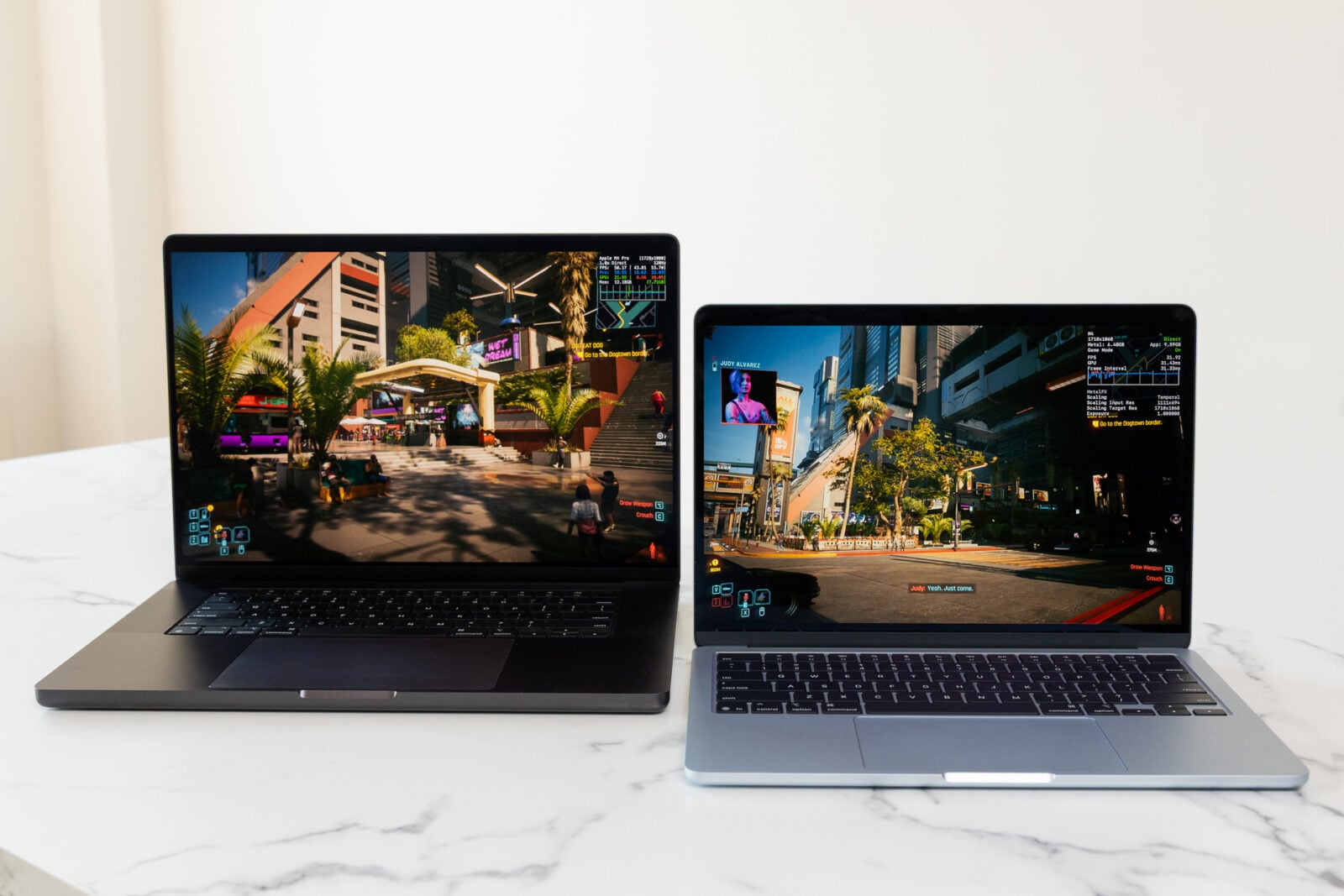
This year’s MacBook Pro refresh was, well, a little underwhelming. Unlike Apple’s usual fanfare, the new M5 lineup arrived quietly, headlined by just one updated 14-inch MacBook Pro model. For a company known for dramatic keynotes and design revolutions, this one barely made a splash. But according to fresh leaks, there’s a good reason why: Apple might be saving its real showstopper for next year—or the year after.
If insider reports are accurate, the upcoming M6 MacBook Pro could bring the kind of major redesign fans have been begging for since the first M-series chips debuted. We’re talking an OLED display, a touchscreen interface, and a long-overdue design overhaul—including, yes, the glorious removal of that dreaded notch once and for all.
A Bigger Leap on the Horizon
The latest whispers come courtesy of Bloomberg’s ever-reliable Apple sleuth, Mark Gurman, who claims the M6-powered MacBook Pro could debut in late 2026 or early 2027. The current 14-inch M5 MacBook Pro sits alongside last year’s M4 Pro and M4 Max models, but the biggest performance and design leaps appear to be reserved for Apple’s next generation of silicon.
Of course, the M6 chip will bring its usual promises of higher efficiency, speed, and power. But what’s really stirring excitement isn’t what’s under the hood—it’s what’s on the screen.
The Long-Awaited OLED Revolution
For years, Apple fans have been waiting for MacBooks to join the OLED era. Unlike LCDs, OLED (Organic Light-Emitting Diode) panels offer deeper blacks, richer contrast, and better overall visual fidelity. Apple’s own “Super Retina XDR” displays on iPhones already showcase what OLED can do, and the tandem OLED technology on the latest iPad Pros—two OLED layers stacked for superior brightness and clarity—has raised expectations even higher.
If these panels make their way to the MacBook lineup, it could be the most visually stunning laptop Apple has ever produced. Imagine editing photos or watching movies on a screen that delivers true contrast and lifelike depth—without the halo effects or backlight bleed common on mini-LED displays.
Touchscreens Are Finally Coming to the Mac
Perhaps even more exciting is the rumor that Apple could finally introduce touchscreen capabilities to the MacBook Pro. Gurman’s sources suggest the new model won’t be a convertible 2-in-1 device like some Windows PCs. Instead, it’ll be a traditional clamshell laptop with a touch-enabled display—something Apple has resisted for years.
It’s an ironic twist, considering CEO Tim Cook once dismissed touchscreen laptops as a hybrid between “a toaster and a refrigerator.” But with iPadOS 26 blurring the line between tablet and laptop—thanks to floating windows, multitasking tools, and desktop-class apps—the timing feels right. The ecosystem is evolving, and Apple seems ready to embrace a more unified experience across its devices.
A Sleeker, Smarter, Notch-Free Future
Beyond the hardware power-ups, Apple is reportedly refining the overall design. The infamous notch could finally be gone, replaced by a Dynamic Island-like feature—an interactive zone for alerts, background tasks, and notifications. Combined with slimmer bezels and an edge-to-edge display, this could mark Apple’s cleanest MacBook design yet.
Both the 14-inch and 16-inch MacBook Pro models are expected to receive these updates. Of course, all that premium tech will come at a cost. Apple will likely raise the price of its M6 lineup to reflect the OLED upgrade and new display technology. The current M5 MacBook Pro starts at around $1,600 for the base configuration, so expect a bump once OLED and touch enter the mix.
Waiting Might Be Worth It
Recent MacBook releases have delivered steady performance improvements, but not much else. If you already own an M-series Mac, upgrading this year might not feel necessary. However, if Apple truly brings OLED, touchscreen functionality, and a fresh redesign with the M6, 2026 could finally be the year the MacBook evolves again—not just faster, but fundamentally better.
Until then, maybe hold off on that M5 purchase. The real magic might just be one more generation away.