
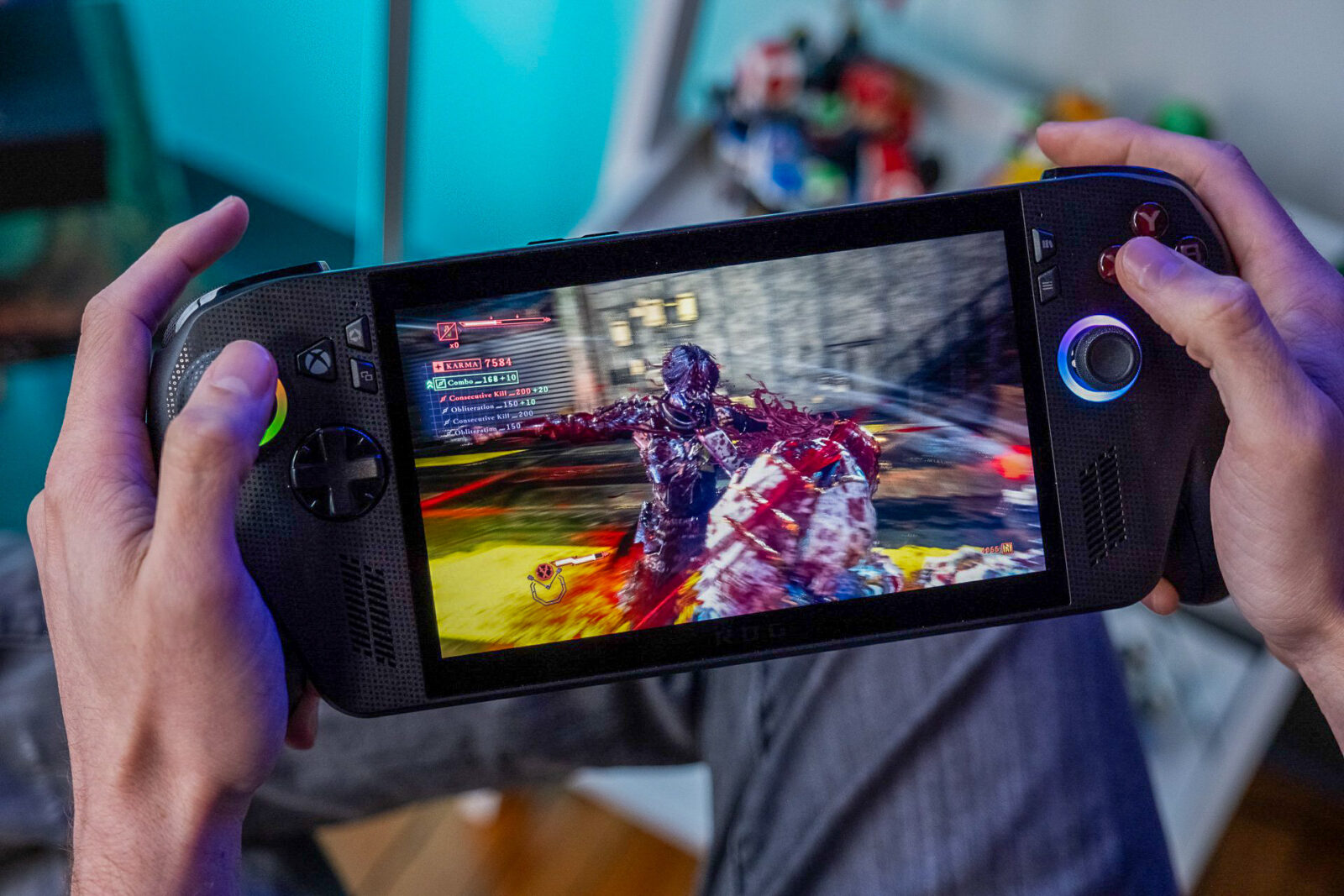
After nearly a decade in the gaming hardware business, Xbox finds itself in a difficult position. Its once-promising smart home of consoles and cloud gaming is now overshadowed by stagnating hardware sales and fading consumer excitement. In an effort to revive its hardware division, Microsoft is pinning its hopes on a new direction — creating a console experience that merges the flexibility of a PC with the instant accessibility and simplicity of traditional consoles.
The first real glimpse of that vision arrived with the Asus ROG Xbox Ally X, a handheld device that Microsoft is clearly positioning as the future of portable Xbox gaming. Compared to other compact Windows-based handhelds released this year, the Ally X provides a smoother and more unified experience. Yet, despite the “Xbox” branding stamped across its design, it still falls short of what most gamers would consider a true console experience.
At its core, the problem isn’t the hardware — it’s Windows. Even with improvements, Windows continues to lag behind Valve’s SteamOS, which remains the gold standard for handheld gaming performance and convenience.
The True Console Experience Is Built on Simplicity
What makes console gaming appealing has always been its simplicity. A player picks up a controller, powers on the device, and jumps right into their game — no updates to manage, no background apps to close, no endless settings to tweak. Windows-based handhelds, even those branded with Xbox’s logo, haven’t yet captured that magic.
Before the ROG Xbox Ally X, Windows 11 handhelds were cumbersome to use. Players often had to fumble with touchscreens to adjust settings or dismiss intrusive pop-ups. The introduction of Full Screen Experience (FSE) was supposed to change that. This new version of Windows inflates every app to fill the screen and puts the Xbox app at the heart of the interface, finally giving players something close to a console dashboard.
For PC gamers, FSE feels like a natural evolution — a sleeker way to navigate Windows. But for console purists, it’s a patchwork solution that hides the OS’s clutter rather than eliminating it. Worse, Microsoft has tied FSE exclusively to the Xbox Ally line, keeping it off popular handhelds like Lenovo’s Legion Go and MSI’s Claw. While Lenovo has suggested that FSE will arrive on its next device by spring, the rollout delays show that Microsoft still hasn’t fully embraced the “console everywhere” philosophy.
Windows Still Needs Work — and Patience Isn’t Infinite
Even on the Xbox Ally X, FSE remains a work in progress. Navigation is limited, pop-ups persist, and power management issues continue to haunt users. While sleep mode battery drain has improved, the device still occasionally “wakes itself” — continuing to play audio while the screen is off, or failing to stay asleep altogether.
By contrast, Valve’s SteamOS continues to set the bar for usability. It’s clean, stable, and optimized for handheld play. While SteamOS doesn’t currently support the AMD Ryzen Z2 Extreme chip used in the Ally X, the open-source Bazzite OS offers a compelling alternative. Built on Linux and inspired by SteamOS, Bazzite delivers better frame rates, smoother performance, and a more console-like experience — all maintained by an active developer community.
When dual-booted on a Lenovo Legion Go 2, Bazzite outperforms Windows FSE across the board. Games load faster, frame rates are more consistent, and switching between devices feels seamless. It even recognized my Steam Deck’s SD card without extra setup. The only real limitation? No native Xbox Game Pass support — a major miss for Microsoft, considering how central Game Pass is to the brand’s ecosystem.
Performance and Playability: Where Xbox Needs to Catch Up
Microsoft’s own games, like The Outer Worlds 2 and Ninja Gaiden 4, technically run on the Xbox Ally X — but not perfectly. Outer Worlds 2 looks great at medium settings but struggles to scale text and UI on the 7-inch display. Ninja Gaiden 4 delivers around 40 fps, which is respectable but inconsistent. There’s no dedicated optimization profile for the Ally X, a feature that other handheld platforms like Nintendo’s Switch 2 are rumored to include.
To its credit, Microsoft has introduced one meaningful improvement: Advanced Shader Delivery. This system preloads shaders during downloads, significantly cutting down loading times for Game Pass titles. It’s a promising start, but not enough to compensate for the device’s broader usability flaws.
Xbox’s Future Depends on More Than Just Branding
Microsoft deserves some leeway — even Valve’s SteamOS was buggy at launch. But the difference is that Valve learned fast, adapting its platform into a cohesive, console-grade experience. For Microsoft, the challenge isn’t just building powerful hardware or flashy features; it’s about creating a seamless, player-first ecosystem that feels like home, not work.
At nearly $1,000 for the Xbox Ally X and $1,350 for the Legion Go 2, these devices occupy a luxury space. For that price, players shouldn’t be troubleshooting power modes or wrestling with pop-ups — they should feel like they’re getting a premium, effortless console experience.
Until Xbox bridges that gap — until it creates a handheld that feels as simple and intuitive as the console it claims to be — the best “Xbox” handheld experience may continue to exist outside Xbox itself.