
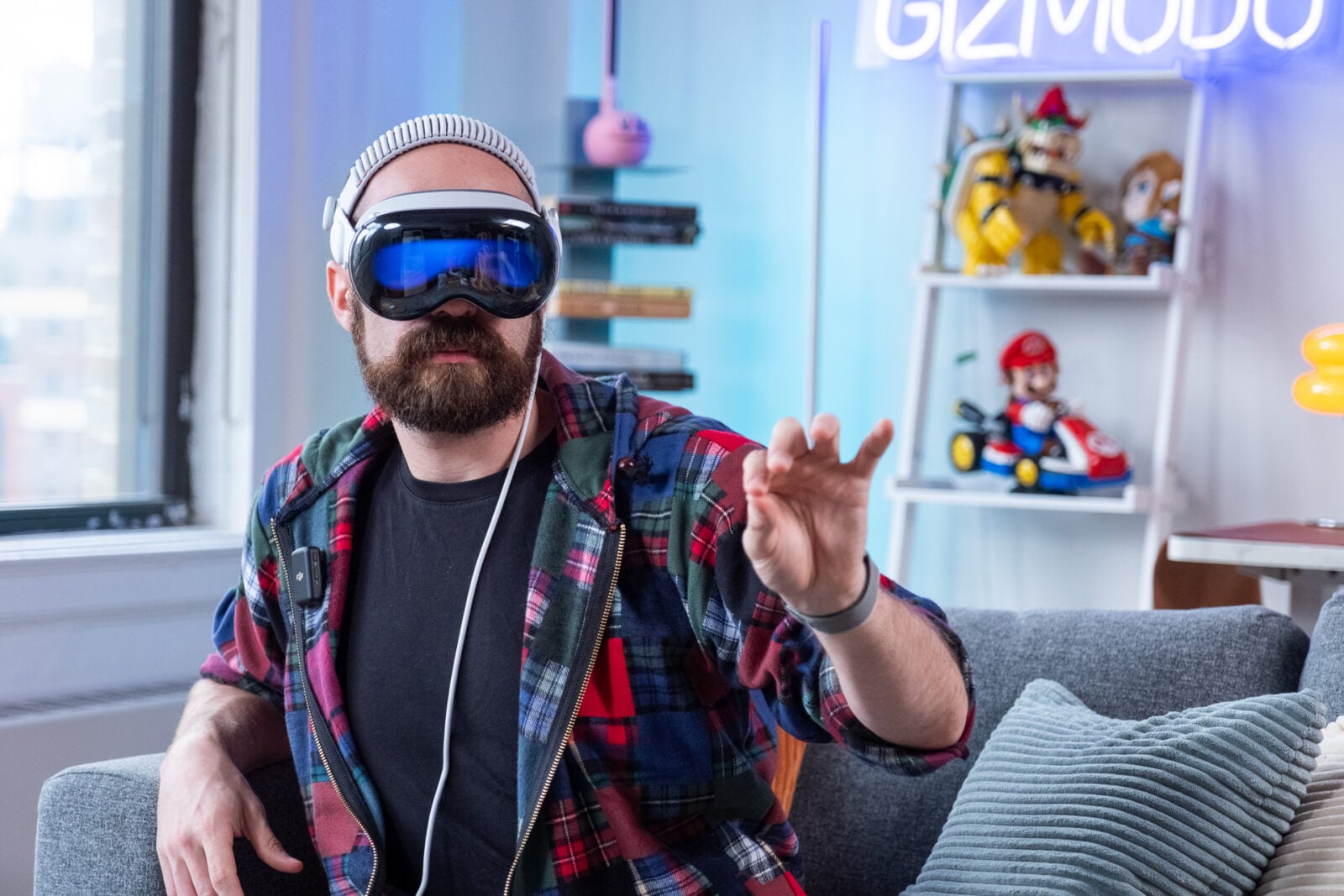
For most people curious about VR and XR, the dream is to get the stunning visual experience of Apple’s Vision Pro without having to shell out $3,500 for it. And honestly, who can blame them? One of the Vision Pro’s biggest bragging rights is its micro-OLED display, the same ultra-sharp screen tech found in Samsung’s Galaxy XR headset. These panels offer incredible contrast, true blacks, and far better motion clarity than the LCD screens used in more affordable devices like Meta’s Quest 3.
Having spent time using both the Vision Pro and the Quest 3, I can say confidently: the difference is night and day.
Beyond image quality, OLED brings another major perk—efficiency. Because OLED pixels turn themselves completely off when producing black, VR/XR headsets using this technology can potentially squeeze out better battery life. That’s an area where even today’s high-end headsets, including the Vision Pro, still struggle.
But here’s the catch:
Micro-OLED panels are incredibly expensive and notoriously difficult to manufacture. That’s why premium headsets cost so much—they’re using components that are cutting-edge, but also pricey.
Now, however, that cost barrier may finally be cracking.
TCL just unveiled a new OLED panel designed specifically for XR devices, and while it isn’t the micro-OLED used in the Vision Pro, it’s being touted as the highest-density OLED-on-glass display ever created. This could be the breakthrough that shrinks prices while still giving users a massive upgrade in visual fidelity.
TCL’s newest XR-focused OLED boasts an impressive 2,560 × 2,740 resolution—higher than the Quest 3’s LCD panel (2,064 × 2,208), though not quite matching the Vision Pro’s ultra-dense micro-OLED. Still, it’s a meaningful leap forward compared to what’s available in mainstream headsets today.
Even better, this display packs a pixel density of 1,512 PPI, which means it’s compatible with premium pancake lenses rather than older Fresnel lenses. For users, that means sharper images, less distortion, and a more compact optical design.
The real promise here isn’t just image quality—it’s pricing.
If TCL’s OLED panels are genuinely cheaper to produce than micro-OLED, manufacturers could create a new class of headsets that sit comfortably between the Quest 3 and Vision Pro:
- better visuals than LCD
- more affordable than high-end micro-OLED devices
- premium lenses and reduced glare
- potentially longer battery life
In other words, TCL may be opening the door to the mid-range XR headset we’ve all been waiting for—premium feel without a luxury price tag.
There are still unknowns, of course. TCL hasn’t confirmed brightness levels, long-term durability, or mass-production costs. We do know the panel hits a 1,000,000:1 contrast ratio, supports 120Hz, and offers 110% wide color gamut, all of which are promising signs for VR/XR adoption.
But one thing is clear: if these panels reach the market, they could dramatically shift the industry. Because as much as people admire Apple’s Vision Pro, very few are willing—or able—to spend thousands of dollars on a device marketed as a “spatial computer.”
More affordable OLED-based headsets could finally bring premium VR/XR experiences to the masses.