
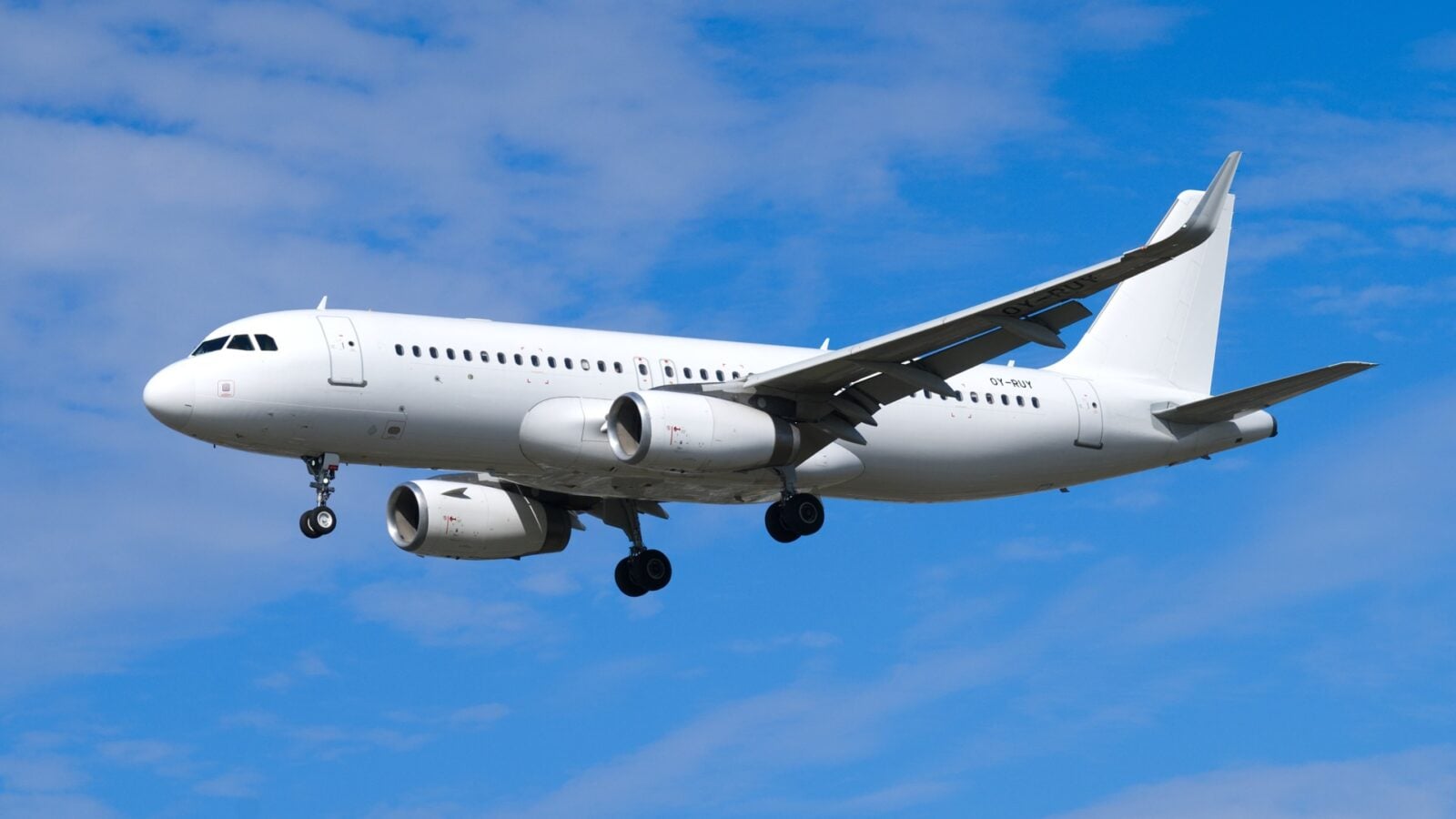
Over the weekend, aircraft manufacturer Airbus issued a sweeping recall affecting thousands of aircraft in its A320 family, ordering a mandatory software update in what industry observers are calling one of the largest technical directives in the company’s history. What makes the situation especially unusual is the suspected source of the problem: radiation coming from the Sun itself.
The timing of the recall could hardly be worse. The Airbus A320 recently overtook the Boeing 737 to become the most delivered commercial jetliner of all time, making it a backbone of global air travel. As a result, the directive triggered disruptions for airlines across multiple continents. Airbus CEO Guillaume Faury acknowledged that the recall was “causing significant logistical challenges and delays” for carriers attempting to keep their fleets operational.
Some airlines were hit particularly hard. Colombian carrier Avianca said the issue affected more than 70 percent of its fleet, forcing the airline to halt ticket sales on certain routes through December 8. That level of disruption underscored just how central the A320 family has become to modern aviation.
The impact was less severe in the United States, however. Major carriers including Delta Air Lines and United Airlines reported only limited effects on their schedules. American Airlines said that all 209 of its affected aircraft had already received the required software update, allowing them to return to service without major interruptions.
Despite the relatively contained impact in the U.S., the issue came to public attention after a troubling October incident involving a JetBlue-operated Airbus A320 flying from Cancun, Mexico, to Newark, New Jersey. During the flight, the aircraft suddenly lost altitude midair, forcing the pilot to divert and make an emergency landing in Tampa, Florida. No passengers were seriously injured, but the unexplained drop raised urgent safety questions.
In a statement released Friday, Airbus said the recall was prompted after investigators determined that intense solar radiation may be capable of corrupting critical flight-control data aboard certain A320 aircraft. According to the company, this type of corruption could interfere with essential onboard systems during flight.
The Federal Aviation Administration (FAA) provided further technical detail in its directive. According to the agency, the JetBlue aircraft experienced a malfunction in its elevator aileron computer (ELAC)—a core system responsible for controlling the aircraft’s pitch, or nose angle. Airbus now believes the malfunction may have been triggered by solar flares, which are sudden bursts of high-energy electromagnetic radiation emitted by the Sun.
These flares, when intense enough, can disrupt electronics by flipping bits in memory or interfering with data transmission. In this case, Airbus suspects that solar radiation corrupted stored or transmitted data within the ELAC, causing it to issue incorrect commands that sent the aircraft into an unexpected descent.
The fix itself is relatively straightforward. Most affected aircraft can return to service after reverting to an earlier, more stable software version. However, Airbus acknowledged that a smaller number of jets may require full hardware replacements before they are cleared to fly again.
Solar radiation has long been a known concern in aviation, particularly for high-altitude flights and polar routes. And the timing is especially concerning because the Sun has been unusually active in recent months. Back in September, researchers reported that the Sun may be entering an unexpected phase of heightened activity, following a steady increase in solar behavior that began around 2008.
Just within the past month, Earth was struck by several powerful solar flares, prompting NOAA’s Space Weather Prediction Center to issue alerts warning that some of these flares were strong enough to cause widespread radio blackouts. Such events can interfere not only with communications, but also with satellites, GPS systems, and sensitive electronics.
Space weather expert Tony Phillips noted earlier this month that massive sunspots had been producing solar flares “for weeks,” adding that there was “no reason to think this activity will subside anytime soon.” In a blog post published Sunday, Phillips warned that a particularly large sunspot was now rotating into direct alignment with Earth, increasing the likelihood that future solar flares could trigger significant geomagnetic disturbances.
For Airbus and the aviation industry as a whole, the recall highlights a growing and complex challenge: ensuring that increasingly digital and software-driven aircraft remain resilient in the face of natural cosmic forces that are entirely beyond human control.