
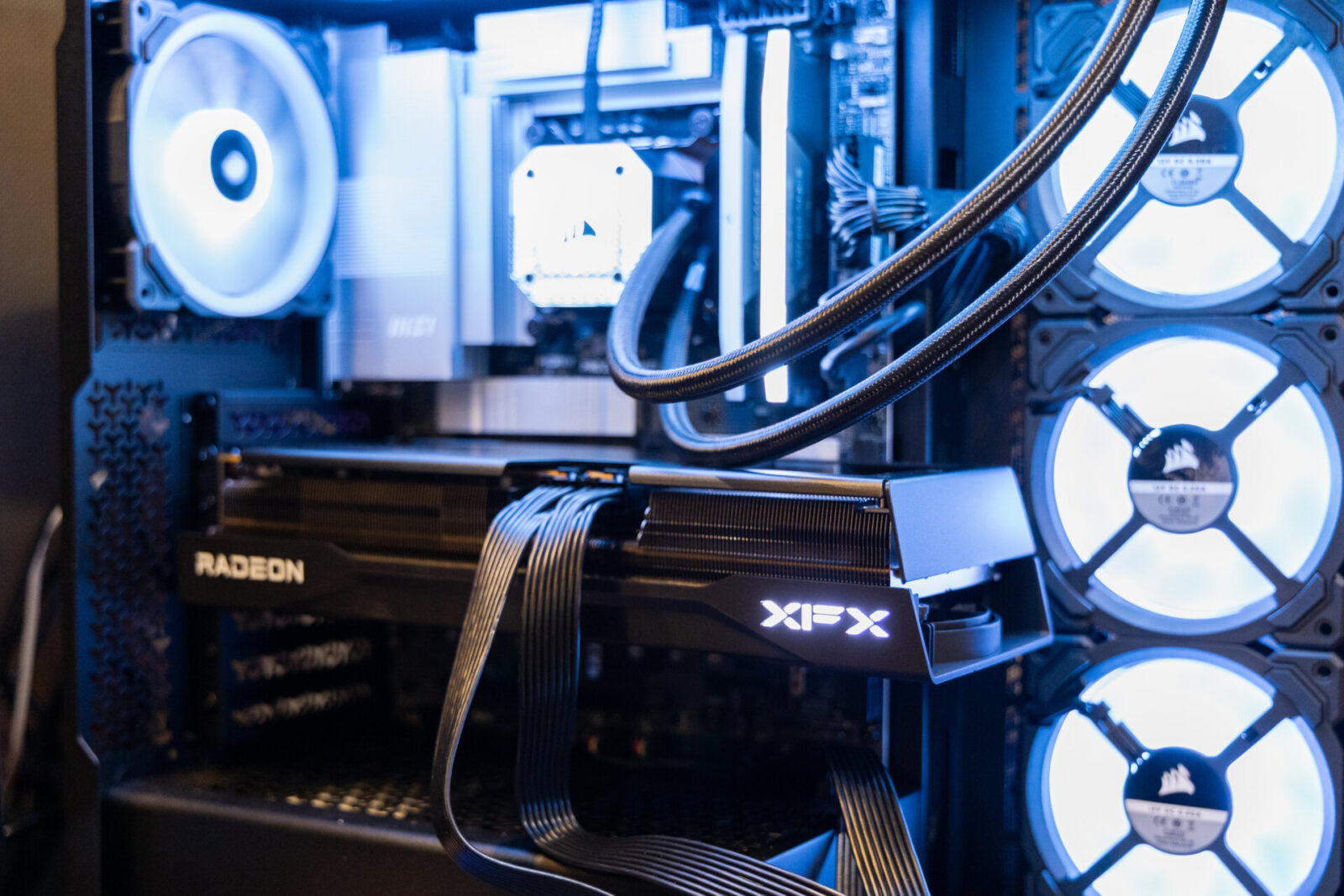
There’s very little reason for optimism if you’re planning to build a PC anytime soon. Over the course of just a few weeks, memory prices have spiraled completely out of control—tripling, quadrupling, quintupled, and climbing so fast they’ve crossed from financial pain into internet meme territory. RAM is already in freefall affordability-wise, SSD prices appear poised to follow, and before long, CPUs and GPUs themselves may become so expensive that building a new PC simply won’t make financial sense.
What was once a carefully budgeted hobby is quickly turning into a luxury purchase.
One of the biggest warning signs comes from AMD, one of the dominant players in desktop CPUs and GPUs. According to a report from Overclock3D, citing anonymous industry sources, AMD is preparing to roll out broad price increases across its entire product stack. That reportedly includes not only current-generation processors like the highly sought-after Ryzen 7 9800X3D, but also older AM5-based Ryzen 7000-series chips that many builders had hoped would remain affordable alternatives.
Overclock3D claims partners were notified that new suggested retail prices were set to take effect earlier this week. The only reason prices haven’t fully exploded yet appears to be lingering Black Friday discounts, which are temporarily masking what’s coming. Once those deals dry up, the floor is likely to drop out.
GPUs Are Next — And the Hits Are Already Lined Up
CPU prices rising would be bad enough, but the looming GPU price hikes are even more alarming. GPUs depend heavily on memory—particularly VRAM—and the same shortages hammering RAM are now rippling through graphics cards.
Well-known GPU leaker harukaze5719, who has a solid track record, posted on X that AMD is planning across-the-board GPU price increases. According to those claims:
- GPUs with 8GB of VRAM will increase by $20
- GPUs with 16GB of VRAM will increase by $40
Those increases align with previous reports from industry analyst Dan Nystedt, who said AMD had already warned supply-chain partners weeks ago that GPU prices were going up.
While $20 or $40 might not sound catastrophic on its own, it becomes extremely painful in context. Many GPUs already sell far above MSRP. AMD’s Radeon RX 9070 XT, designed for 4K gaming, remains difficult to find anywhere near its official $600 price, months after launch. Even lower-end models like the RX 9060 XT and older RX 7600 are affected—and once higher VRAM costs begin cascading through the market, those “budget” cards won’t stay budget-friendly for long.
Gizmodo reached out to AMD for comment and will update if the company responds.
The Supply Chain Is Breaking in All the Wrong Places
Unlike Nvidia, AMD doesn’t manufacture its own graphics cards. Instead, board partners—the companies that actually build and sell GPUs—must source both GPU dies and VRAM themselves. Nvidia typically supplies VRAM directly to ensure compliance with design specs, but rumors circulating on China-based social platform Weibo suggest Nvidia may be pulling back on VRAM supply.
If true, that would force individual manufacturers to negotiate independently with memory suppliers, pitting smaller companies against one another to secure limited stock. In a market already starved for DRAM, that’s a recipe for further scarcity and even higher prices.
Manufacturers are already messaging customers accordingly. A customer support representative for GPU maker PowerColor reportedly told Reddit users to “buy before the last week of the year before prices kick up.” That’s not subtle—it’s a warning.
Consumers Are Running Out of Options
At this point, buying brand-new PC hardware is starting to look like a losing battle, and consumers desperately need alternatives.
One potential outlet is Valve’s upcoming Steam Machine, a compact PC/console hybrid built around a semi-custom AMD system-on-chip. While it won’t rival high-end desktops—especially with its rumored 8GB of VRAM—that limitation may actually help keep costs in check.
Valve developer Pierre-Loup Griffais told Ars Technica that Valve has worked to improve memory management so games don’t suffer excessively under tighter constraints. In an era where RAM and VRAM are becoming prohibitively expensive, lower specs may be the only path to affordability.
Still, even optimism comes with a caveat. The Steam Machine is expected to cost more than a PlayStation 5, and given the state of component pricing, there’s no guarantee it won’t cross into uncomfortable territory as well. Heading into 2026, consumers simply need options—because building a traditional PC may soon be financially disastrous.
The Real Culprit: AI’s Endless Appetite
At the center of all this chaos is AI.
High-speed memory isn’t just in demand—it’s being vacuumed up by massive AI data centers that are springing up across the U.S. and internationally. These facilities pay top dollar for DRAM and NAND, incentivizing semiconductor manufacturers to shift production away from consumer markets and toward the AI gold rush.
The consequences are already visible. Samsung, one of the world’s largest semiconductor producers, is reportedly limiting DRAM allocations to its own smartphone division ahead of the 2026 Galaxy S26 launch. According to Seoul Economic Daily, Samsung’s semiconductor arm now forces its mobile division to renegotiate memory supply every three months instead of locking in annual guarantees—all to avoid missing out on higher-margin AI contracts.
When companies are willing to starve their own products to feed AI demand, consumers don’t stand a chance.
In the end, that bill gets passed straight down the chain. Memory shortages inflate component costs. Component costs inflate PC prices. And consumers—builders, gamers, and hobbyists—are left paying more for less, with no relief in sight.
If you’re thinking about building a PC right now, the advice is painfully simple: don’t.
And unfortunately, there’s every reason to believe the pain isn’t ending anytime soon.