
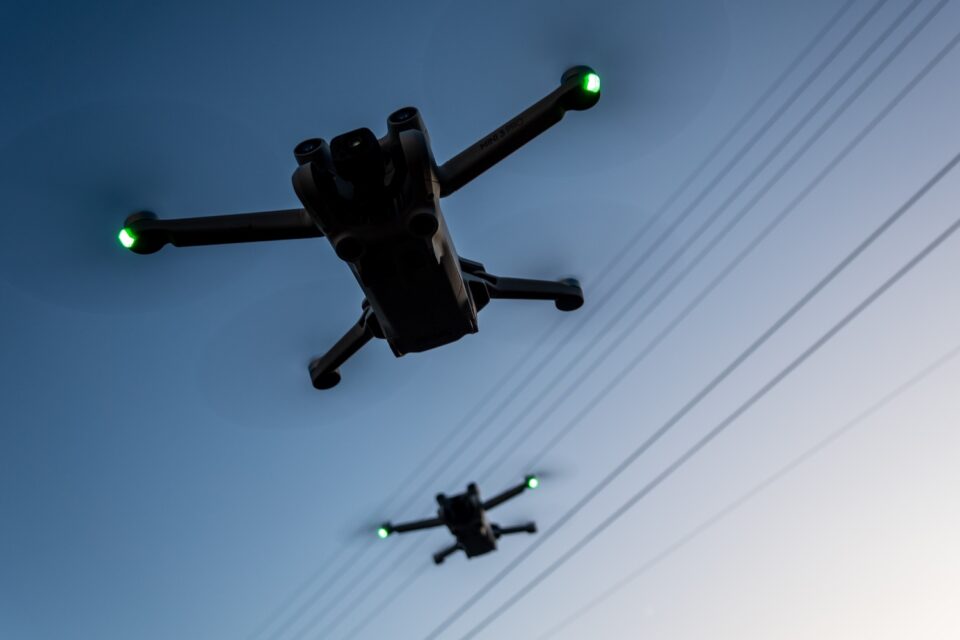
The U.S. Federal Communications Commission (FCC) announced on Monday that it will prohibit the introduction of new foreign-made drones and drone components into the American market, citing national security concerns. The decision represents a major escalation in the federal government’s efforts to limit the presence of overseas technology—particularly Chinese-made products—in critical areas of U.S. infrastructure. Industry experts warn that the move could significantly disrupt the drone ecosystem in the United States, especially given the widespread reliance on popular foreign brands.
According to the FCC, the decision followed an extensive review process that concluded certain drones and related components manufactured outside the United States present what the agency described as “unacceptable risks to the national security of the United States and to the safety and security of U.S. persons.” As a result of these findings, the FCC has added foreign-made drones and drone components to its “Covered List,” a designation reserved for communications equipment and services that are barred from authorization due to security concerns.
Placement on the Covered List effectively prevents new versions of these products from receiving approval to operate within the U.S. While the FCC has previously used this mechanism to restrict telecommunications equipment from companies such as Huawei and ZTE, its application to consumer and commercial drones marks a significant expansion of the policy’s scope.
In a fact sheet accompanying the announcement, the FCC emphasized that the ban is part of a broader effort to protect U.S. airspace, particularly in anticipation of several high-profile events scheduled to take place over the next few years. These include the 2026 FIFA World Cup, the America250 celebrations commemorating the nation’s 250th anniversary, and the 2028 Summer Olympic Games in Los Angeles. Officials argued that these events could become attractive targets for malicious surveillance or disruption, making it essential to limit the use of technology that could be exploited by foreign adversaries.
Despite the sweeping nature of the announcement, the FCC clarified that the ban is not retroactive. Drones that have already been purchased by consumers, businesses, or government agencies will remain legal to operate, and retailers will still be allowed to sell models that were previously approved under existing rules. However, no new foreign-made drone models—or updated versions of existing ones—will be authorized unless they receive special clearance.
The fact sheet also notes that exceptions may be granted on a case-by-case basis. The Department of Homeland Security (DHS) and the Department of Defense retain the authority to approve specific new drone models if they determine that those products do not pose a national security threat. However, the criteria for such exemptions remain unclear, leaving manufacturers and buyers uncertain about what the future market will look like.
The FCC’s action stems from a defense authorization bill passed by Congress last year, which mandated a comprehensive review of the national security risks associated with foreign-made drones. The legislation placed particular emphasis on Chinese manufacturers, including industry leaders such as SZ DJI Technology and Autel Robotics. The law required regulators to complete their assessment by December 23, a deadline that directly preceded the FCC’s announcement.
While the current ban represents a decisive regulatory step, U.S. concerns about Chinese-made drones are far from new. Efforts to restrict their use date back nearly a decade. In 2017, the U.S. Army prohibited the use of DJI drones within its operations after determining that they posed potential cybersecurity risks. Around the same time, the Department of Homeland Security issued internal warnings suggesting that drones manufactured in China could be collecting sensitive flight data and transmitting it back to their makers, potentially exposing critical information about U.S. infrastructure and security operations.
These concerns have continued to shape federal policy, even as drones have become increasingly integrated into everyday life. Over the past several years, drone usage has expanded rapidly across a wide range of sectors. Hobbyists use them for photography and recreation, while businesses rely on them for real estate marketing, filmmaking, agriculture, mapping, construction inspections, and security monitoring. Law enforcement agencies and emergency responders also use drones for search-and-rescue missions, crowd monitoring, and disaster response.
Because of this widespread adoption, the FCC’s decision has already sparked backlash within the U.S. drone community. Critics argue that the ban could stifle innovation, raise costs, and limit access to reliable technology. Many point out that foreign manufacturers—particularly DJI—have dominated the market not because of political considerations, but because they offer affordable, high-quality, and user-friendly products.
According to reporting by The Wall Street Journal, DJI alone accounts for an estimated 70% to 90% of commercial, hobbyist, and local government drone usage in the United States. The company’s dominance means that any restrictions on its products are likely to have far-reaching consequences. The newspaper reports that some drone operators have already begun stockpiling DJI models in anticipation of tighter restrictions and limited availability in the future.
DJI responded to the FCC’s decision with sharp criticism. In an emailed statement to Gizmodo, a company spokesperson said DJI was “disappointed” by the move and rejected claims that its products pose a security threat. The spokesperson argued that allegations surrounding DJI’s data security practices are not supported by evidence.
“As the industry leader, DJI has advocated for an open, competitive market that benefits all U.S. consumers and commercial users, and will continue to do so,” the statement said. The company also emphasized that its drones are among the most secure on the market and noted that they have undergone years of scrutiny by U.S. government agencies and independent third-party reviewers.
Supporters of the FCC’s decision, however, argue that national security concerns must take precedence over market convenience. They contend that even the potential for foreign surveillance or data misuse justifies a cautious approach, especially as drones become more capable and more deeply embedded in critical operations.
As the ban takes effect, the future of the U.S. drone industry remains uncertain. Domestic manufacturers may see new opportunities to expand, but scaling production to meet demand will take time. Meanwhile, consumers, businesses, and public agencies may face higher prices, fewer choices, and operational challenges as the market adjusts to the new regulatory landscape.
Ultimately, the FCC’s decision underscores a broader shift in U.S. technology policy—one that prioritizes national security and supply-chain control, even when it comes at the cost of convenience, affordability, and global competition. Whether this approach strengthens long-term security or creates new obstacles for innovation remains an open question.