
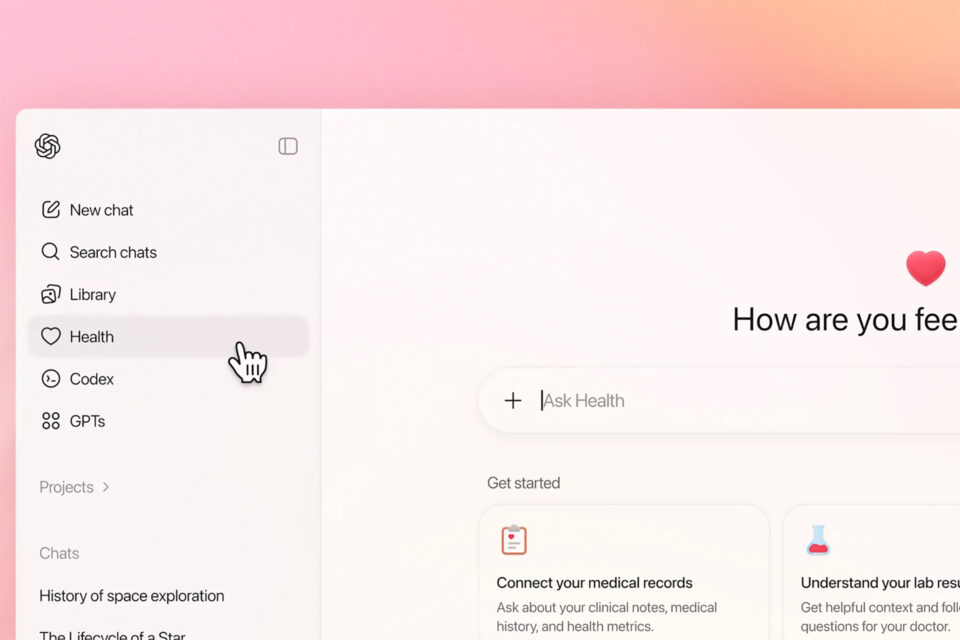
For years now, ChatGPT users have been quietly—and sometimes recklessly—using the chatbot as a stand-in for medical guidance. People have asked it to interpret lab results, diagnose unexplained symptoms, offer mental health advice, and suggest treatments that range from harmless lifestyle tweaks to potentially dangerous interventions. Much of that activity has lived in a gray area: unofficial, unregulated, and often explicitly discouraged by medical professionals. Now, OpenAI is no longer pretending that behavior doesn’t exist. Instead, it’s embracing it.
On Wednesday, OpenAI announced ChatGPT Health, a dedicated, health-focused version of its flagship AI chatbot. The new offering is designed specifically for medical, wellness, and lifestyle-related use cases—and, crucially, it is built to connect directly to users’ medical records, health apps, and wearable devices. In doing so, OpenAI is taking a decisive step toward formalizing ChatGPT’s role in healthcare, transforming what was once casual experimentation into a structured product with far-reaching consequences.
In its announcement, OpenAI positioned ChatGPT Health as a tool meant to help users make sense of an often overwhelming healthcare system. The company says the chatbot can assist with understanding recent test results, preparing for upcoming doctor appointments, navigating insurance options, and receiving guidance on diet, fitness, and overall wellness based on individual health patterns. Framed this way, ChatGPT Health is less a diagnostic engine and more a personal health interpreter—an always-on assistant meant to translate medical complexity into plain language.
To deliver that level of personalization, ChatGPT Health supports integrations with a wide range of third-party services. Users can link Apple Health to share sleep, heart rate, and activity data; connect MyFitnessPal for nutrition tracking and dietary recommendations; tap into AllTrails for outdoor activity suggestions; and use Peloton data to receive tailored workout guidance. The system can even connect to Instacart, allowing ChatGPT to generate a shoppable grocery list based on what it determines aligns with a user’s dietary goals or health needs. The result is an AI that doesn’t just answer questions, but actively influences daily decisions about food, exercise, and routine.
OpenAI says ChatGPT Health has been in development for more than two years and was built in collaboration with over 260 physicians across 60 countries. That medical input, the company claims, helped shape how the chatbot responds to sensitive health questions, when it should encourage users to seek professional care, and how it communicates uncertainty. The message is clear: this is not a casual feature add-on, but a product OpenAI wants taken seriously by both users and healthcare stakeholders.
Despite the announcement, ChatGPT Health is not yet fully available. OpenAI is currently limiting access to a small cohort of early users as it makes final refinements. A waitlist has been posted for broader access, though at the time of writing, the signup link does not appear to be functional—an irony not lost on observers given the scale of the launch.
Geography also plays a role in what users can access. Integration with medical records is currently limited to the United States, while other features are available globally—with notable exceptions. Users in the European Union, Switzerland, and the United Kingdom are excluded, likely due to stringent digital privacy regulations that make the handling of sensitive health data particularly fraught. Their absence underscores how difficult it is to deploy consumer health AI at scale without running headlong into regulatory barriers.
Privacy, unsurprisingly, is one of the central tensions surrounding ChatGPT Health. OpenAI’s flagship chatbot has already weathered criticism over data handling, including a design flaw that once made some user conversations publicly searchable. That history makes the idea of entrusting the platform with medical records, biometric data, and behavioral health patterns especially sensitive.
OpenAI insists it has learned from past mistakes. The company says ChatGPT Health is protected by purpose-built encryption and strict data isolation, and it has emphasized privacy safeguards as the product’s defining feature. Health-related conversations are said to live in “separate memories,” intended to prevent sensitive information from bleeding into general chatbot use. However, those Health chats can still draw on information from non-Health interactions, creating an asymmetry that may raise questions about how siloed the data truly is. OpenAI also states that Health conversations will not be used to train its foundation models—a critical reassurance, though one that users must ultimately take on trust.
The launch of ChatGPT Health is not an isolated move. It represents the most visible milestone in OpenAI’s steadily intensifying push into healthcare. In May 2025, the company introduced HealthBench, a benchmarking framework designed to evaluate AI performance in medical contexts, which later helped inform the development of ChatGPT Health itself. Over the summer, OpenAI made a series of high-profile hires for its healthcare AI team, including Nate Gross, co-founder of physician networking platform Doximity, who now leads efforts to co-create healthcare tools with clinicians and researchers.
That same period saw OpenAI announce a partnership with Kenya-based primary care provider Penda Health, highlight GPT-5’s ability to proactively flag potential health concerns and generate treatment plans, and join a Trump-led private-sector initiative aimed at deploying AI assistants in patient care while facilitating medical record sharing across more than 60 participating companies. Together, these moves paint a picture of a company methodically embedding itself deeper into the healthcare ecosystem.
Adding to that momentum was the hiring of Fidji Simo as OpenAI’s CEO of applications. Simo has repeatedly identified healthcare as the AI use case she finds most compelling, describing ChatGPT Health as “really personal” to her. Under her leadership, OpenAI appears increasingly focused on consumer-facing applications that blur the line between everyday convenience and institutional responsibility.
Industry-wide, OpenAI’s bet reflects a broader shift. Healthcare AI, once treated as experimental or aspirational, is steadily becoming normalized despite ongoing controversies. Regulators, too, appear to be softening their stance. Utah has approved AI-assisted prescription renewals, and the FDA has signaled it will take a relatively hands-off approach to regulating wellness software and wearables—as long as companies refrain from claiming their products are medical-grade.
“We want to let companies know, with very clear guidance, that if their device or software is simply providing information, they can do that without FDA regulation,” FDA Commissioner Marty Makary said this week in an interview with Fox Business.
Still, the distinction between “information” and “intervention” is not always clear in practice. Even seemingly benign health suggestions can lead to serious harm if users misunderstand, over-trust, or misapply them. Over the past year, ChatGPT has faced intense scrutiny for its role in mental health-related incidents, including allegations that inadequate safeguards contributed to fatal outcomes. Those cases loom large over the launch of any health-focused AI product, no matter how carefully framed.
OpenAI appears keenly aware of both the scale of the opportunity and the magnitude of the risk. Earlier this week, the company released a report claiming that more than 40 million ChatGPT users seek health advice every day—an astonishing figure that helps explain why the company is eager to bring that activity under a more controlled umbrella. Alongside the report, OpenAI floated early policy ideas, including calls for broader access to global medical data and a clearer regulatory pathway for consumer health AI. The company also said it plans to publish a comprehensive health AI policy blueprint in the coming months.
For now, ChatGPT Health stands as OpenAI’s boldest attempt yet to move artificial intelligence from the periphery of healthcare into its daily workflow. Whether it becomes a trusted assistant, a regulatory flashpoint, or a cautionary tale will depend not just on the technology itself, but on how carefully—and transparently—it is deployed in a domain where the stakes could not be higher.