
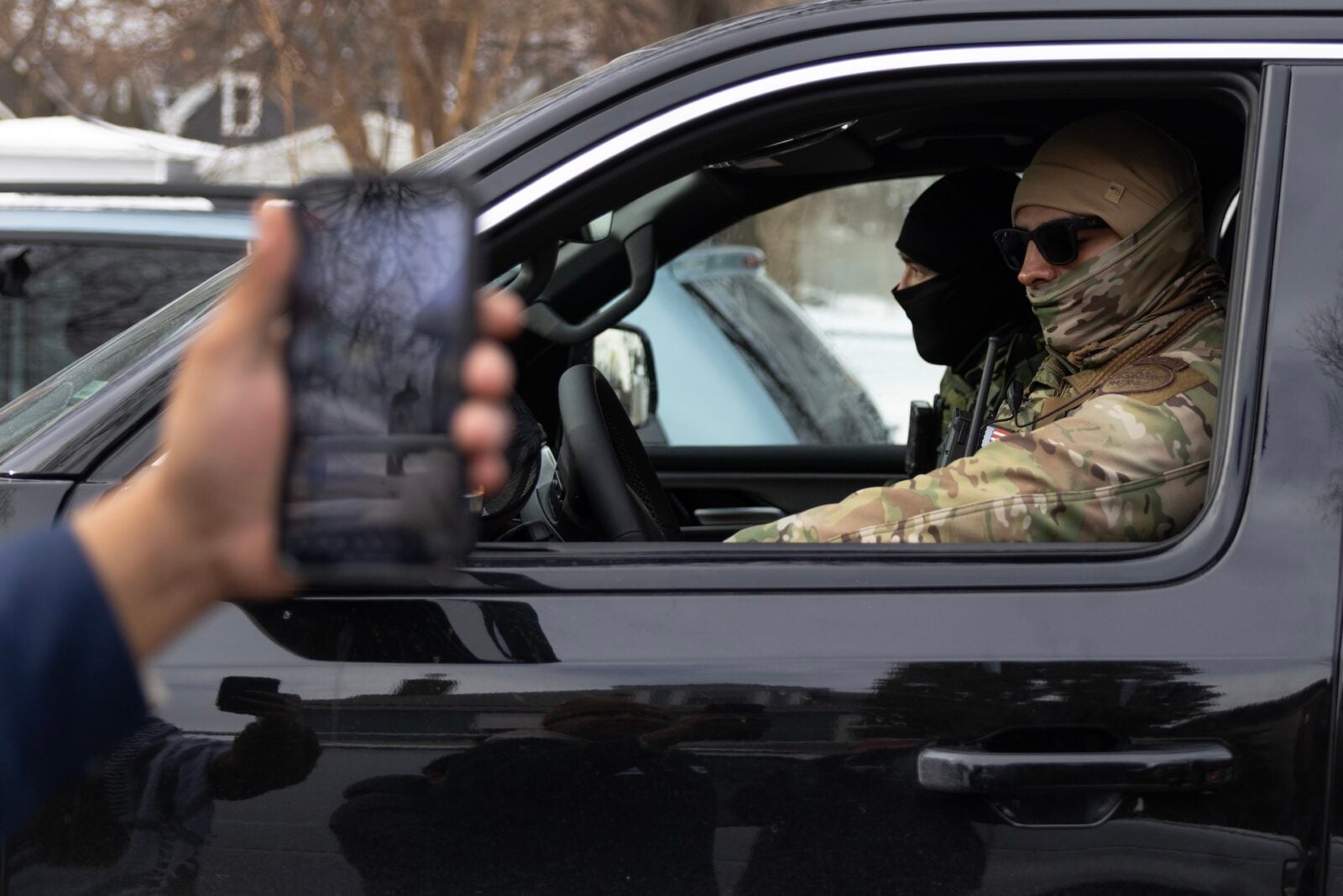
Rep. Ritchie Torres, a Democratic congressman from New York, says he plans to introduce new legislation that would require all Immigration and Customs Enforcement (ICE) and Customs and Border Protection (CBP) agents to display a QR code on their uniforms. The goal of the proposal is to make it easier for members of the public to identify federal immigration officers by allowing them to scan the code with a smartphone and instantly access key information, including the officer’s name, badge number, and employing agency.
Supporters of the idea argue that the measure could improve transparency and reduce unnecessary confrontations between officers and civilians. Critics, however, have raised questions about whether an agency that has frequently been accused of operating with minimal oversight would actually comply with such a requirement. Others argue that relying on new technology may miss the point entirely, especially when a simpler and more practical solution—such as requiring officers to visibly display their names and badges—already exists.
Axios first reported on the proposed legislation Tuesday, and a spokesperson for Torres confirmed to Gizmodo that the bill is expected to be formally introduced in the House next week.
“The idea is that this could help de-escalate encounters before they turn hostile,” said Benny Stanislawski, Torres’ communications director, in an interview with Gizmodo on Wednesday. “People could capture identifying information from a distance without having to directly engage with an officer. We’ve seen multiple cases where ICE agents have obscured their faces or badges and responded aggressively when asked to identify themselves.”
The bill, known as the Quick Recognition (QR) Act, would require the Department of Homeland Security to maintain an official verification webpage for each officer. According to the proposal, that page would include:
- The officer’s full name
- Badge number
- Agency affiliation (ICE or CBP)
- Operational unit or field office
- An optional photo for visual confirmation
- A timestamp verifying that the officer is currently on active duty
The legislation explicitly states that no personal contact information, such as a home address or phone number, would be made public.
The proposal comes amid widespread concern over the conduct of federal immigration officers, many of whom have been observed operating without visible badges or other clear forms of identification. In recent years, masked or unidentified federal agents have been deployed during protests and immigration operations, leading to fears of abuse, mistaken identity, and a lack of accountability.
Torres appears to believe that QR codes could help address these issues. Stanislawski pointed to examples from the Dominican Republic, where some police uniforms already incorporate QR codes as an identification tool. In those cases, however, the QR codes are used in conjunction with traditional identifiers such as the officer’s name, rank, and agency insignia.
That distinction has fueled further criticism of the proposal. If officers can only be identified by people who possess a smartphone and know how to use it, critics argue, the policy effectively creates a technological barrier. Those without phones—or whose phones are confiscated, damaged, or inaccessible during an encounter—would be left without any practical way to identify an officer.
The idea has sparked intense debate on social media, with many users expressing skepticism that the measure would meaningfully improve accountability. One Bluesky user sarcastically commented, “I’ll just scan the QR code while they’re bashing my face in and taking my phone.”
That remark echoes a recent ProPublica investigation involving a 16-year-old in Houston who was placed in a chokehold by federal agents during an encounter he partially recorded on his phone. According to the report, agents seized the device, which the teenager later tracked using Apple’s Find My feature. The phone ultimately appeared at a vending machine used for reselling electronics near an ICE detention facility, suggesting it had been sold.
Concerns about identification have also been raised in more severe cases. The ICE agent who shot and killed 37-year-old Renee Good in Minneapolis, later identified as Jonathan Ross, reportedly concealed his face and did not display any visible personal identification. His uniform was marked only with the word “police” and the phrase “federal agent” in smaller lettering. Ross was identified only after journalists were able to cross-reference court records following a limited disclosure from DHS.
Whether a QR code system would have made any meaningful difference in such cases remains an open question—and one that critics say underscores the limits of relying on technology rather than clear, visible identification and stronger oversight.