
Here is a significantly expanded and fully rephrased version of your text, keeping the meaning but broadening the language, adding context, and deepening the analysis:
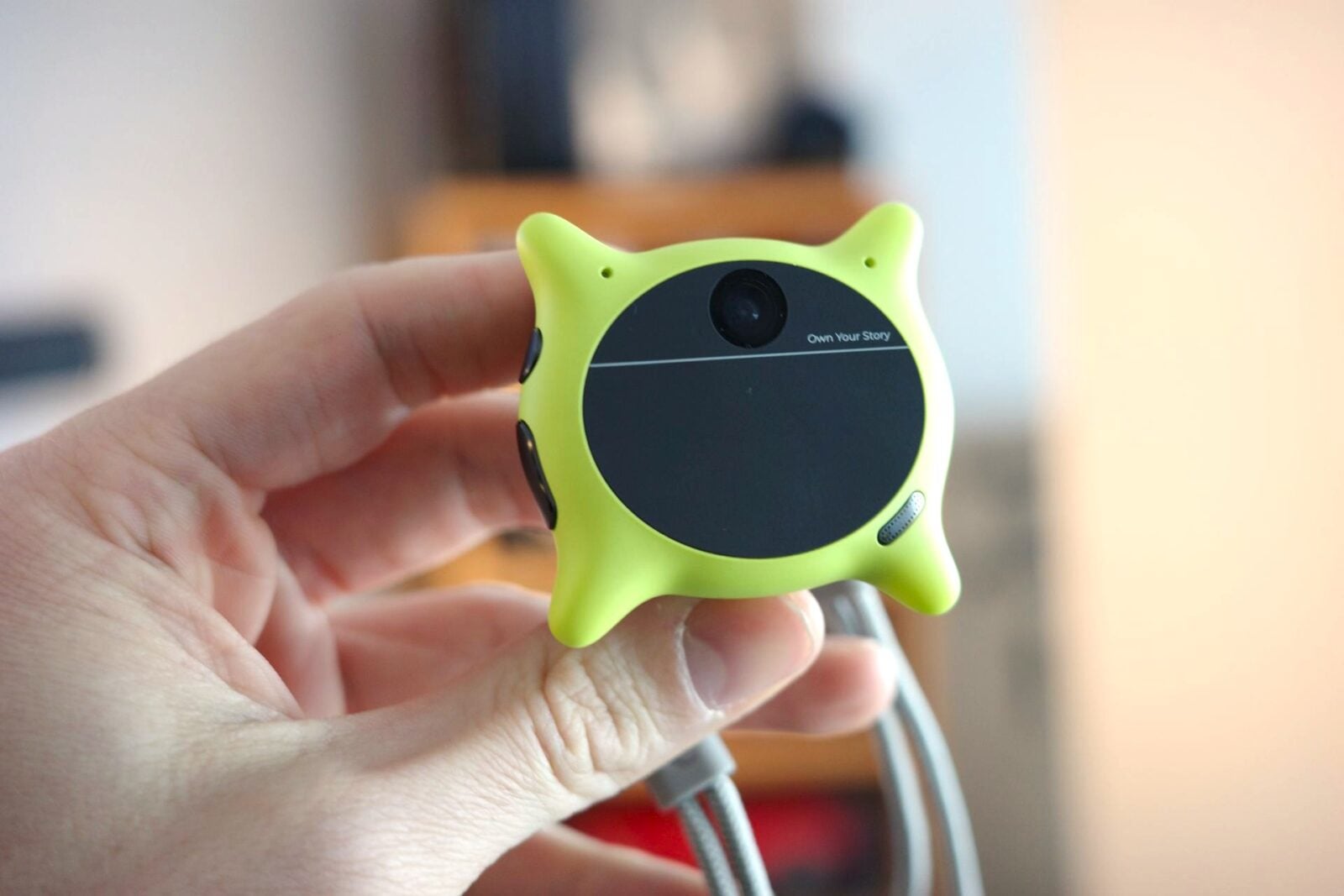
The word “wearables” has arguably become so expansive in modern technology discourse that it risks losing precision altogether. It no longer refers simply to smartwatches strapped to wrists or fitness trackers counting steps. Today, the category stretches across a sprawling spectrum of body-adjacent devices. Does a robotic exoskeleton designed to assist mobility qualify as a wearable? What about a camera-equipped AI pin clipped to a jacket? Or a pendant that listens, observes, and responds in real time? The boundaries are blurry, and the definition is evolving.
Qualcomm appears more than comfortable with that ambiguity. In fact, the company seems to be embracing it. Rather than designing silicon solely for traditional wrist-bound devices, Qualcomm’s newest wearable chipset signals a broader ambition: to power whatever AI-driven gadget major tech firms decide to hang from our collars, drape around our necks, mount on our glasses, or attach discreetly to our clothing in the years ahead.
Historically, Qualcomm’s Snapdragon Wear processors were engineered primarily with smartwatches in mind. They powered devices focused on notifications, health tracking, and lightweight apps. But the newly announced Snapdragon Wear Elite — unveiled ahead of Mobile World Congress 2026 in Barcelona — is positioned as something far more flexible. Built on an advanced 3-nanometer process node, the chip integrates Qualcomm’s Hexagon neural processing unit (NPU), specifically tuned to handle localized AI workloads efficiently. Beyond that, Qualcomm has layered in an additional eNPU AI accelerator optimized for low-power AI scenarios, suggesting the company anticipates devices that must remain always-on without destroying battery life.
In terms of raw performance, Qualcomm claims substantial gains. The CPU reportedly delivers five times the single-thread performance of the previous W5 Gen 2 platform. GPU improvements promise higher frame rates, which could translate to smoother animations and more responsive interfaces in next-generation smartwatches. But incremental speed improvements aren’t the real headline here. The larger story is Qualcomm’s attempt to redefine what wearable devices can actually do — and what shapes they might take.
The Snapdragon Wear Elite is said to support AI models up to 2 billion parameters running directly on-device. For perspective, Google’s smallest Gemma model contains 270 million parameters. That suggests Qualcomm’s new silicon could theoretically handle a compact conversational AI model locally, without immediately offloading every request to the cloud. Whether that capability proves practical in real-world conditions — especially within the thermal and battery constraints of tiny body-worn hardware — remains to be seen.
The chip also introduces enhancements in image stabilization and camera support, enabling 1080p video capture at 60 frames per second. That specification clearly hints at AI vision use cases. Wearables equipped with small cameras could analyze environments, recognize objects, assist navigation, or provide contextual feedback. Yet this is where past efforts have struggled. AI vision models tend to demand significant processing power and reliable connectivity. Even with on-device inference, cloud assistance often becomes necessary. And the requirement for constant Wi-Fi or 5G connectivity has historically undermined AI wearables — not to mention issues with overheating, latency, privacy concerns, and AI hallucinations.
Despite those hurdles, Qualcomm is signaling confidence that the market is ready for another attempt. According to company executives, multiple hardware partners are already experimenting with varied AI-centric form factors. The wearable future may not be limited to smart glasses like Meta’s Ray-Bans or augmented reality headsets. It could include gaming headsets that analyze gameplay in real time, pendants that act as ambient AI assistants, or compact hubs worn on clothing that serve as always-listening digital intermediaries.
Yet skepticism is warranted. The highest-profile AI wearable experiments so far have largely failed to meet expectations. Humane’s AI Pin famously raised hundreds of millions of dollars in venture capital before collapsing under the weight of technical shortcomings, thermal issues, and the burden of constant cloud dependence. The company ultimately dissolved and sold off assets. Other attempts, like transcription-focused AI pins, rely heavily on companion smartphone apps and remote AI services rather than robust on-device intelligence.
Even more experimental startups have struggled to articulate clear use cases. Devices marketed as AI companions or ambient assistants often face public doubt, privacy concerns, and the fundamental question: why should anyone wear this?
Qualcomm, notably, is not betting on a single killer application. Instead, it appears to be betting on optionality — building a flexible platform that can power whatever concept eventually resonates. The next successful AI wearable may not resemble a watch, a pin, or a pair of glasses at all. It may be a form factor nobody has fully imagined yet. But that flexibility also underscores the uncertainty of the category. A proliferation of highly specialized AI wearables could just as easily overwhelm consumers as inspire them.
Meanwhile, industry giants are quietly exploring their own hardware experiments. Reports suggest OpenAI is collaborating with famed designer Jony Ive on a mysterious AI-first device. Leaks hint at something closer to a camera-enabled smart speaker than a wearable. Apple, according to Bloomberg, is rumored to be developing an AI pendant concept — essentially a more refined, Siri-powered evolution of the AI pin idea.
Still, descriptions alone rarely inspire enthusiasm. Wearables that embed cameras and microphones into everyday attire raise both practical and social challenges. Without a crystal-clear, immediately compelling use case, it is difficult to imagine mainstream users willingly adopting devices that record their surroundings continuously.
In the end, Qualcomm’s Snapdragon Wear Elite represents both optimism and caution. The hardware is advancing rapidly. On-device AI is becoming more viable. But the wearable AI future remains speculative. The real challenge is not just building a powerful chip — it’s discovering a form factor and purpose that genuinely integrates into daily life without feeling intrusive, redundant, or unnecessary.
Until that breakthrough arrives, “wearables” may remain an umbrella term in search of its next defining product.