
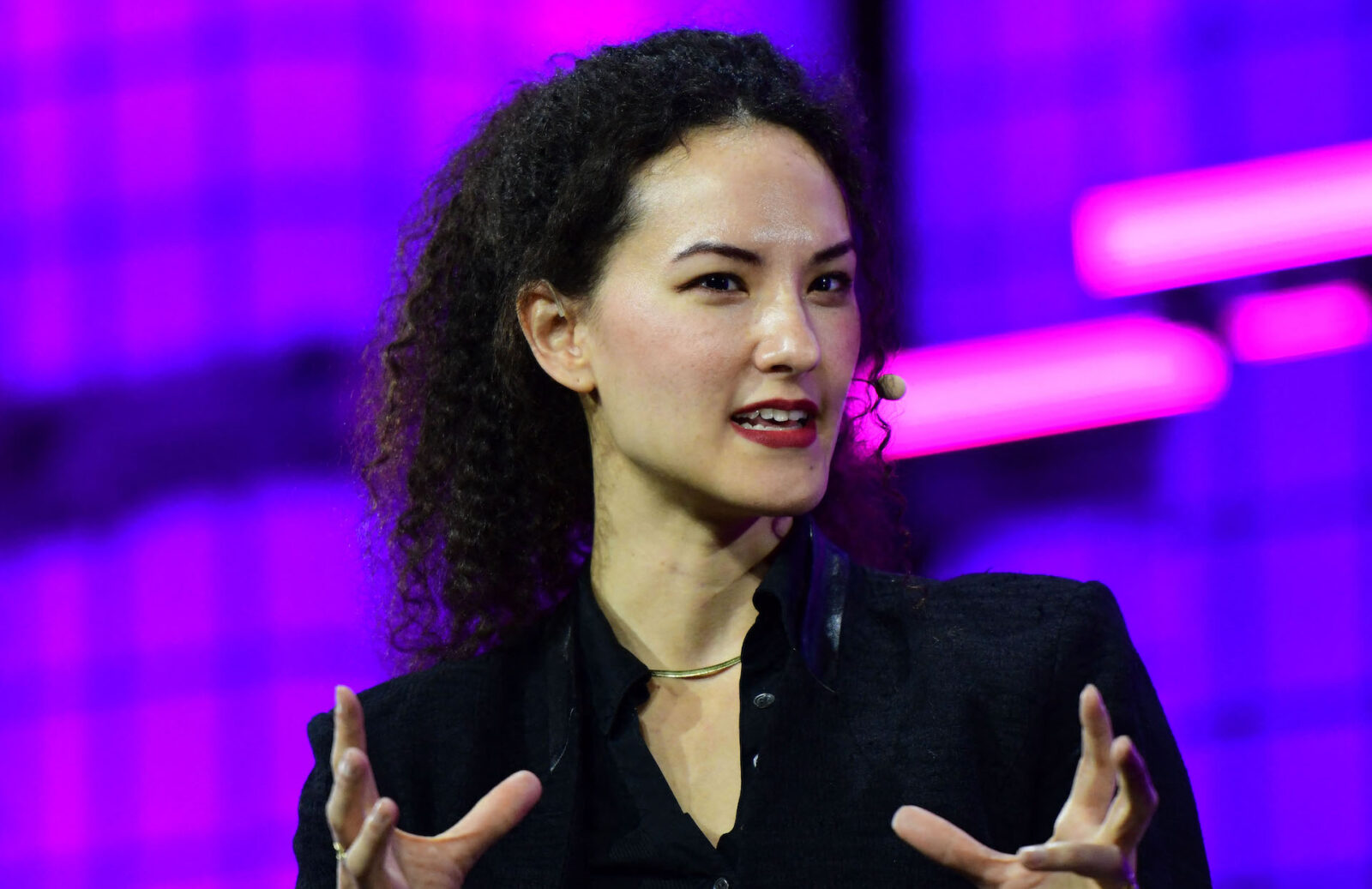
Jay Graber, the chief executive officer of the decentralized social media platform Bluesky, is transitioning away from her role as CEO to take on a new position within the company. According to an official announcement, Graber will move into the role of Chief Innovation Officer, while venture capitalist and former Automattic CEO Toni Schneider will temporarily step in as interim CEO to oversee the platform’s leadership during the transition.
The leadership change marks a significant moment for Bluesky, a rapidly growing social networking platform that emerged as one of the most prominent alternatives to Twitter—now known as X—during the turbulent years following Elon Musk’s takeover of the company.
Jay Graber Shifts Focus to Product Innovation
In a blog post announcing the change, Graber explained that her new role will allow her to return to what she enjoys most: building new technologies, experimenting with ideas, and pushing forward innovative concepts in decentralized social networking.
She noted that the Chief Innovation Officer position will give her the opportunity to focus more directly on developing new features, exploring emerging technologies, and shaping the long-term product vision for Bluesky.
Graber wrote that she feels “most energized by exploring new ideas, bringing a vision to life, and helping people discover their strengths,” emphasizing that the new role will allow her to concentrate on innovation rather than day-to-day executive management responsibilities.
This transition reflects a broader shift in Bluesky’s internal structure as the company continues to evolve its technology, expand its user base, and refine its approach to decentralized social media infrastructure.
Toni Schneider Steps In as Interim CEO
To maintain stability in leadership, Bluesky has appointed Toni Schneider, a venture capitalist and the former CEO of Automattic—the company behind WordPress.com—as interim chief executive officer.
Schneider brings extensive experience in scaling internet platforms, open-source ecosystems, and community-driven technologies. His background in leading Automattic through a period of rapid growth is expected to help guide Bluesky during this transitional phase.
Industry analysts say Schneider’s appointment signals that Bluesky is prioritizing strategic management and platform stability while allowing Graber to focus on technical innovation and long-term product development.
Bluesky’s Rise Amid Twitter/X Turmoil
Bluesky’s rapid growth in recent years has been closely connected to the migration of users away from Twitter/X following the controversial changes implemented under Elon Musk’s leadership.
As dissatisfaction with Twitter’s policies, algorithm changes, and moderation decisions increased, many users began searching for alternative social platforms. Bluesky quickly became one of the most visible destinations for these digital migrants.
The platform has developed a reputation as a welcoming space for many users who identify as politically progressive. Moderates and centrist voices are also present on the platform, though they tend to avoid highly polarizing cultural or political debates. Meanwhile, right-leaning users are relatively rare and often participate mainly through trolling or confrontational commentary.
Far-left users—including those aligned with socialist or communist ideologies—also exist within the Bluesky ecosystem, though they sometimes find themselves at odds with the broader community norms that shape conversations on the platform.
Concerns About Political Echo Chambers
At times, Graber herself has appeared uneasy with the degree of political uniformity that has developed among some Bluesky communities.
During a widely discussed moment in October, Graber acknowledged criticism that the platform had begun to resemble an ideological echo chamber, where users largely reinforce each other’s political viewpoints rather than engage with diverse perspectives.
The conversation quickly gained traction across the platform. After responding to some criticism, Graber briefly became the center of attention—what internet culture often calls the “main character” of the day on social media—sparking extensive discussion about Bluesky’s evolving community culture and moderation philosophy.
The incident generated long threads of commentary and analysis about whether Bluesky’s user base was becoming too politically homogeneous and how the platform might balance open conversation with healthy community standards.
Jay Graber’s Unusual Tech Career Path
Graber’s journey into the world of social media leadership is far from conventional.
According to a 2023 Forbes profile, her early career included an unusual job in 2015 assembling bitcoin mining equipment inside a repurposed ammunition factory. The experience gave her firsthand exposure to the early cryptocurrency ecosystem and the technical infrastructure behind blockchain networks.
She later transitioned into the development of Zcash, a privacy-focused cryptocurrency designed to provide stronger protections for financial transactions.
This background in decentralized systems and cryptography ultimately influenced her work with Bluesky, which was initially conceived as an open protocol for decentralized social networking.
Bluesky’s Origins and Jack Dorsey’s Vision
Bluesky was originally launched as a project by Jack Dorsey, the former CEO and co-founder of Twitter. Dorsey envisioned the platform as an open and decentralized standard for social media, allowing users to maintain greater control over their data, algorithms, and online identities.
The goal was to create a new type of social networking architecture where individuals could choose or customize the algorithms that determine what content appears in their feeds.
However, Dorsey later criticized the direction of the project, suggesting that Bluesky may have begun repeating some of the same mistakes he believed he made while running Twitter—particularly in terms of moderation policies and centralized decision-making.
Challenges in Bluesky’s User Growth
Despite strong early momentum and media attention, recent data suggests that Bluesky’s growth trajectory may be facing new challenges.
Research from analytics firm Similarweb reported that daily active usage on the Bluesky mobile app declined by nearly 40 percent compared to the same period a year earlier, just before the 2024 U.S. election cycle.
While the platform still maintains a dedicated and active user community, these numbers suggest that sustaining long-term engagement in the competitive social media landscape remains a significant challenge.
Bluesky continues to compete with other decentralized platforms and emerging Twitter alternatives, including services that are experimenting with open protocols, federated networks, and algorithmic customization.
What the Leadership Change Means for Bluesky
Graber’s move to the role of Chief Innovation Officer may signal a strategic shift for Bluesky as the company seeks to refine its technology and differentiate itself in the crowded social networking market.
By focusing on innovation, Graber is expected to play a key role in shaping the platform’s decentralized infrastructure, improving user-controlled algorithms, and experimenting with new social media tools.
Meanwhile, Toni Schneider’s leadership as interim CEO could help stabilize business operations and guide the platform through its next phase of growth.
As the social media landscape continues to evolve—with users increasingly interested in decentralized platforms, algorithm transparency, and digital autonomy—Bluesky’s leadership transition could influence how the company positions itself in the broader competition for the future of online communication.