
There’s nothing inherently wrong with a proud mother celebrating her billionaire son—who among us wouldn’t? But in this case, the post being shared is pure misinformation. The real hero in this story isn’t a self-driving car or some cutting-edge AI system; it’s Matthew Topchian, a quick-thinking human driver whose reflexes and instincts—powered by flesh and blood, not silicon and code—prevented a potentially deadly disaster.
Last Thursday, a small military propeller plane was forced to make an emergency landing near Oklahoma City. The landing didn’t go as planned—the aircraft crashed along a dusty back road on the city’s outskirts. Thankfully, both people on board escaped unharmed. However, the incident sparked a fire after the plane clipped two utility poles during descent. Before coming to a stop, it also came dangerously close to colliding with a Tesla that happened to be passing by, minding its own business. (For context, this particular model of aircraft is often used in South America for eradicating coca crops—a detail that underscores just how unusual this situation already was.)
Soon after, Maye Musk, Elon Musk’s mother, joined the chorus of Tesla enthusiasts on X (formerly Twitter), celebrating what they believed was a miraculous act of technology. According to them, Tesla’s Full Self-Driving (FSD) system had saved the day, steering the car out of harm’s way just in time to avoid a catastrophic plane crash.
The problem? That’s not what happened—at all.
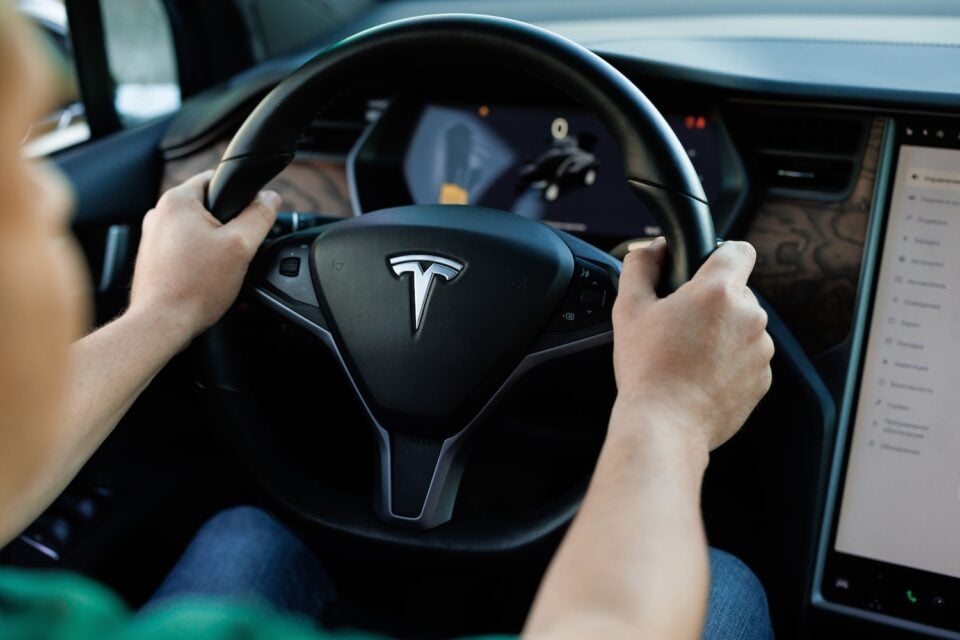
The driver, Matthew Topchian, who originally posted footage of the incident on TikTok, has made it abundantly clear that he was driving manually when the near-miss occurred. Responding to a viewer’s question about whether the vehicle was in FSD mode, Topchian wrote, “Manually, the FSD is really good but it woulda absolutely macked that plane.” Translation: he was behind the wheel, fully in control, and believes that if Tesla’s self-driving mode had been engaged, the car would have collided with the plane instead of avoiding it.
Despite this, misinformation spread like wildfire. A user named David Bellow posted the video on X with the caption: “WOW! Tesla Full Self-Driving dodges a freaking plane falling out of the sky!” The post quickly went viral, amassing millions of views and a wave of celebratory comments from Tesla supporters proclaiming the dawn of a new age of AI-powered driving safety. Some even declared, “The Tesla self-driving car has reached a level of safety I did not think was possible for another decade,” and “Autopilot dodged a plane. That’s not self-driving — that’s situational awareness on wheels.”
Reality check: none of that is true.
Bellow’s post has since been flagged with a community note clarifying that the Tesla was not in Full Self-Driving mode, and that the evasive action was taken entirely by the human driver. Yet, despite being corrected, Bellow refused to delete his post, insisting he would “do his own research.” He even suggested that the TikTok account could be a “bot” or that Topchian “changed his story to look like a racecar driver.”
Meanwhile, the false narrative continues to circulate across social media, serving as yet another reminder of how quickly misinformation can spread when tech fandom meets online hype.
At the end of the day, the only “autopilot” that saved lives in Oklahoma City was human instinct. Matthew Topchian deserves the credit—not Tesla’s software, not Elon Musk, and certainly not the wishful thinking of his mother’s social media followers.