
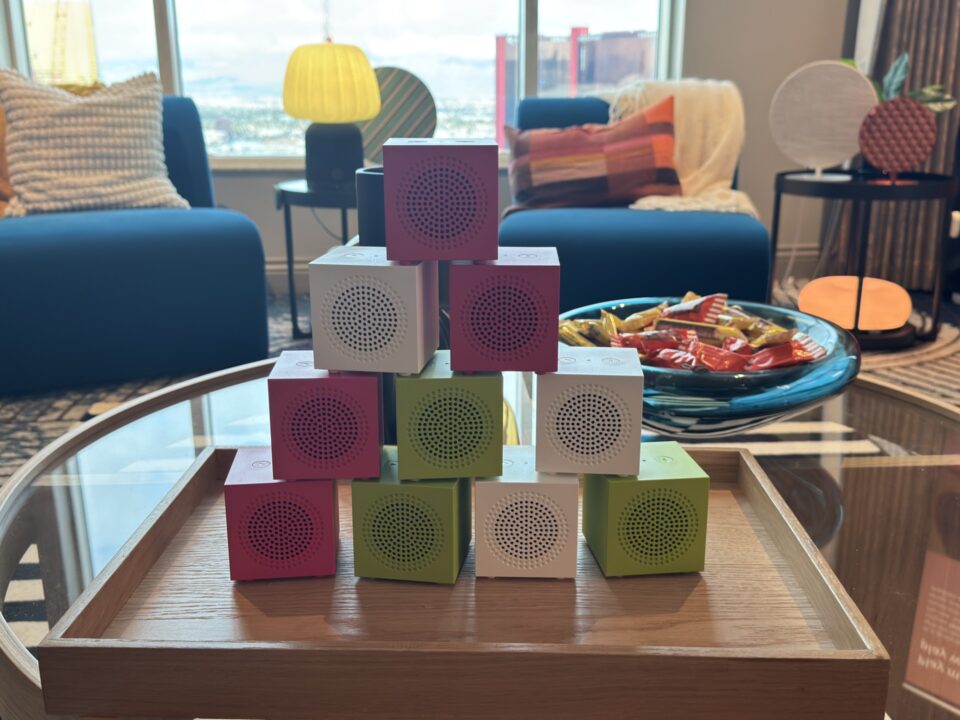
At CES 2026, IKEA made its debut at the massive technology showcase, marking the first time the furniture giant has ever had a presence at the event. Among the range of products it unveiled was a surprisingly charming new Bluetooth speaker called the Kallsup. The speaker is a tiny, cube-shaped device that immediately stands out—not just for its ultra-compact size, but for how much personality and performance it manages to pack into a product that costs just $10. Despite its low price, the Kallsup feels far more delightful and thoughtfully designed than you might expect. IKEA plans to release the speaker in April, with color options including red, white, and green.
Small and lightweight yet reassuringly solid in the hand, the Kallsup is made of plastic and features a grid of speaker holes on one side. Around the back, there’s a USB-C port for charging, while the front houses a small LED status light flanked by two simple buttons used for power, playback, and Bluetooth pairing. From the moment you interact with it, the speaker exudes charm—not only because of its adorable design, but also thanks to the playful, human-made sound effects it produces. Actions like powering on or pairing trigger whimsical audio cues, such as soft boops or gentle whooshing noises, that give the device a surprisingly warm, friendly personality.
Under the hood, the Kallsup runs on Bluetooth 5.3 and supports a unique multi-speaker feature that allows up to 100 units to be synchronized together. Pairing multiple speakers requires a specific sequence of long presses on the play button, which isn’t immediately intuitive but works once you get the hang of it. When several Kallsup speakers are connected, they’re able to fill a room with sound that’s impressively clear and full for their size. The audio isn’t tinny or overly compressed, though bass is understandably limited—a reasonable trade-off given the speaker’s tiny form factor and budget-friendly price.
That said, the design isn’t without its quirks. IKEA’s choice to include only two buttons can make certain functions confusing at first. For example, it’s not obvious that you need to long-press the play button rather than the Bluetooth button to pair speakers together. Likewise, manually turning the speaker off isn’t clearly explained, and it seems the device largely relies on timing out on its own when left idle.
Still, these minor usability issues do little to detract from what is otherwise a surprisingly fun and capable little speaker—one that feels like a standout among IKEA’s growing lineup of tech-adjacent products.
Gizmodo is reporting live from Las Vegas all week, bringing you the latest news and hands-on impressions from CES 2026. Be sure to follow along for continued coverage of the newest gadgets and innovations unveiled at the show.