
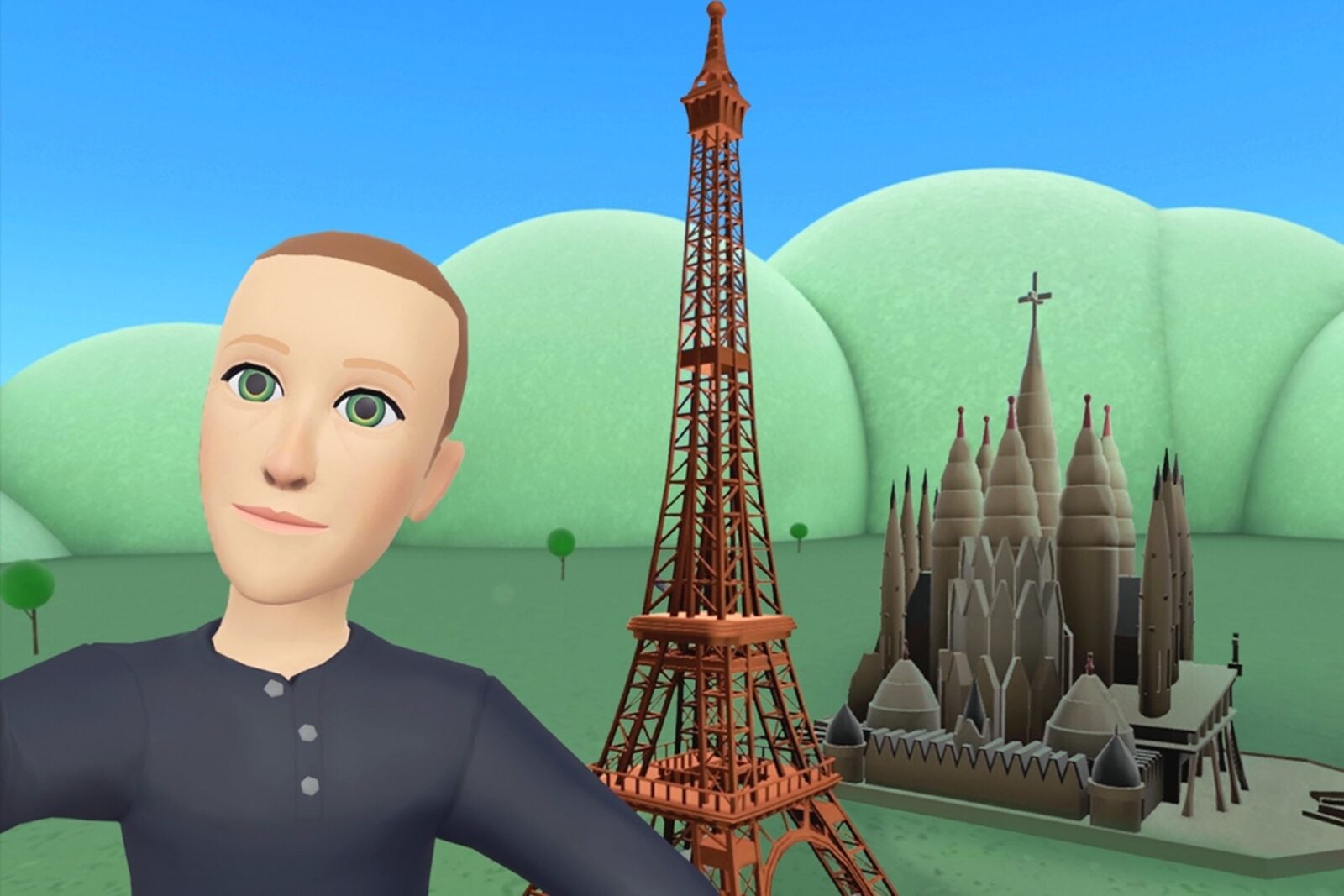
The tiny handful of people still wandering around Meta’s Horizon Worlds — all seven of them, give or take — just got some unsettling news. According to a new Bloomberg report, Meta is preparing for major budget cuts inside its metaverse division, signaling that the company’s grand virtual dream could soon be facing an even harsher reality. Sources say Meta is expected to shrink the budget for Reality Labs, its sprawling XR and VR division, by as much as 30 percent. And these cuts may not be far off; they could hit as early as January as the company finalizes spending plans for the new fiscal year.
Reality Labs encompasses a large mix of Meta’s digital reality ambitions, but Bloomberg reports that two areas are likely to be hit especially hard. First is Horizon Worlds — the company’s once heavily hyped social-metaverse playground, which was supposed to be the future of digital interaction but instead became an online ghost town filled with empty plazas and strangely cheerful avatars. The second vulnerable category is virtual reality itself. Despite Meta’s major investment in VR hardware and software, the company appears to be shifting its attention and funding toward augmented reality and smart glasses, particularly as the Ray-Ban and Oakley product lines continue to expand and crowd its catalog.
In many ways, huge financial cutbacks at Reality Labs aren’t shocking at all. The division has been losing money at an unimaginable scale since 2021 — approximately $70 billion over the last few years. For any company looking to free up cash for a massive pivot toward artificial intelligence, Reality Labs stands out as the most obvious target to trim. What is surprising is just how spectacularly Meta’s enormous metaverse gamble failed. Remember when Meta triumphantly announced that avatars would finally get legs? Or when the graphics looked like something ripped straight from the Nintendo Wii era? Or when Horizon Worlds was so empty you could practically hear the digital tumbleweeds blowing past? And, of course, how the company bet its entire identity on the movement by renaming itself from Facebook to — yes — Meta.
The missteps were so monumental that Mark Zuckerberg himself has essentially stopped talking about Horizon Worlds or “the metaverse” altogether, at least in any public or meaningful way. But even in tech, ignoring a problem doesn’t make it magically disappear. If anything, the metaverse became an awkward reminder of promises that were never fulfilled. The one silver lining? If Horizon Worlds quietly fades into the digital abyss, it’s unlikely anyone will shed a tear. Most people forgot it existed years ago.
The VR side of Meta’s business, however, tells a slightly different story. Many users — myself included — actually enjoy Meta’s headsets, particularly the Quest 3 and 3S. They’re not perfect, and most of us don’t use them every day, but when we do strap them on, they’re surprisingly capable devices: light enough, reasonably powerful, and relatively affordable compared to the competition. Unfortunately, being a gadget people only occasionally remember they own isn’t exactly the kind of success story that reassures investors, especially when the division behind it is losing billions and AI is sucking up nearly all of Silicon Valley’s attention and resources.
Still, there’s always a chance that Horizon Worlds survives the coming storm. Maybe, against all odds, it dodges extinction and evolves into the vibrant, immersive digital universe Meta once promised — a place where millions gather, create, and explore. But realistically? If you’re looking for a lively virtual world full of actual players, you don’t need to sit around waiting for the metaverse to miraculously reinvent itself. You could just log into Fortnite and have your digital social life up and running in five minutes.