
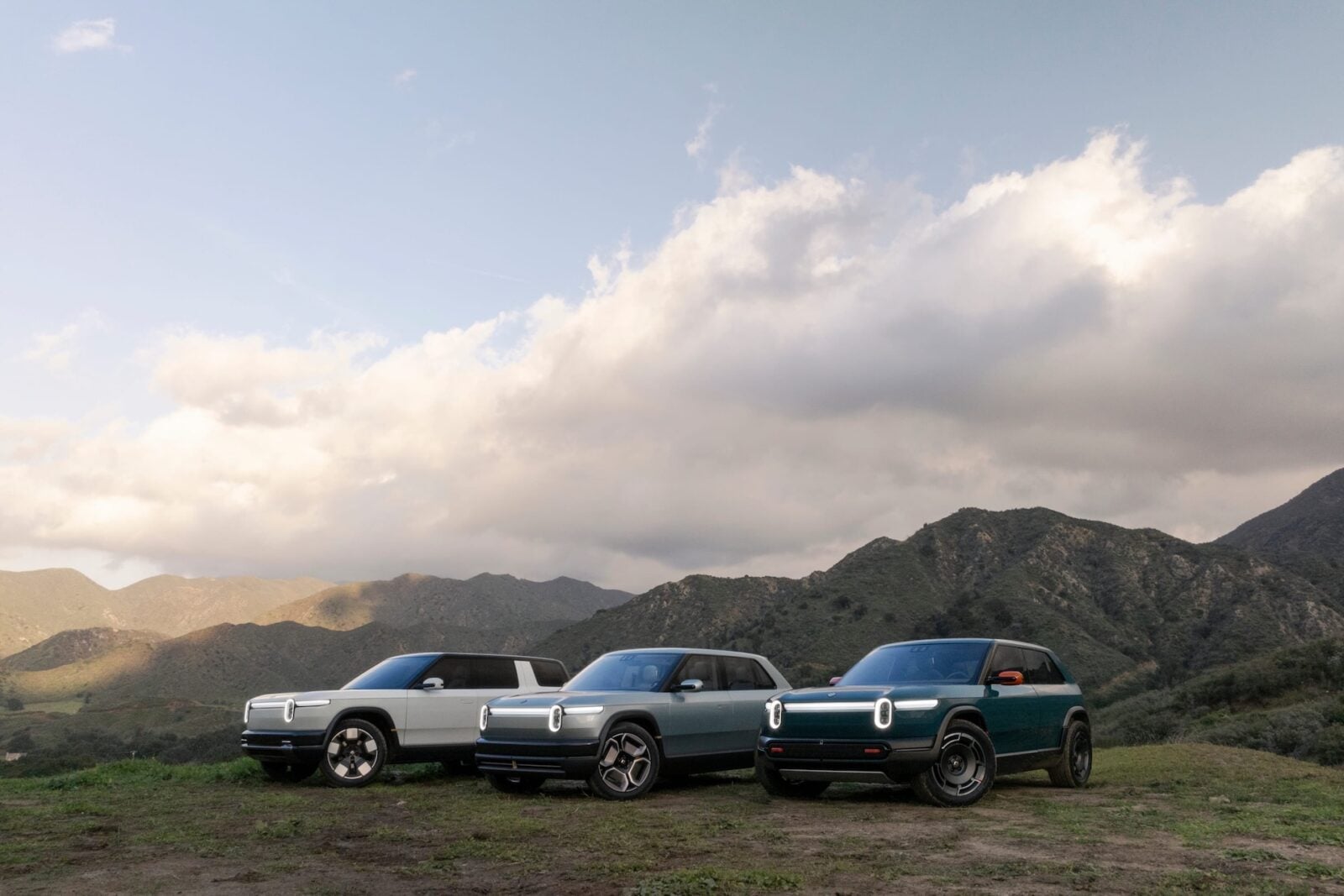
Rivian is moving aggressively to prepare for what it hopes will be a pivotal wave of new buyers later this year, timed with the debut of its more affordable $45,000 R2 electric SUV. As anticipation builds around the smaller, mass-market model, the California-based automaker is laying groundwork behind the scenes to ensure that growth doesn’t outpace infrastructure. In two separate announcements, the company outlined upgrades in two critical pillars of the ownership experience: smarter at-home charging and a significantly expanded vehicle service network.
The strategy reflects a broader realization across the EV industry—selling electric vehicles is only half the battle. Supporting them seamlessly, affordably, and conveniently is what determines whether customers stay satisfied.
Smarter, Grid-Aware Charging at Home
One of the defining advantages of owning an EV is the ability to refuel overnight in your own driveway or garage, avoiding gas stations altogether. For many drivers, plugging in at home is not just a convenience—it’s the economic backbone of EV ownership. Now, Rivian is partnering with EnergyHub to make that experience more intelligent, automated, and cost-efficient.
Through the collaboration, Rivian vehicles will integrate with EnergyHub’s grid-aware software platform to optimize charging speeds and timing. The system analyzes local utility pricing structures, time-of-use rate plans, and grid demand patterns to ensure drivers are charging when electricity is cheapest and when renewable energy sources are more abundant. In practical terms, that could translate into lower monthly utility bills, reduced peak-load strain, and a cleaner energy mix powering each vehicle.
EnergyHub emphasizes that the implications extend beyond individual households. Managed charging, especially as EV adoption accelerates nationwide, can help utilities balance demand more effectively. Instead of thousands of drivers plugging in simultaneously during peak evening hours, software coordination spreads usage across optimal windows, smoothing out consumption spikes that could otherwise stress infrastructure.
Seth Frader-Thompson, President of EnergyHub, underscored the broader importance of the initiative, noting that Rivian’s connected software ecosystem and strong customer engagement allow drivers to participate more easily in utility incentive programs. By making EVs “grid-aware,” vehicles effectively become dynamic energy assets—capable of responding to real-time electricity conditions rather than simply drawing power passively.
The platform is designed to work across diverse regions and utility providers, each with its own billing methodologies and demand-measurement frameworks. Whether customers are on tiered pricing models, dynamic time-of-use plans, or peak-demand structures, the goal is to simplify the complexity behind the scenes while maximizing savings in the foreground.
In short, Rivian isn’t just selling vehicles—it’s attempting to embed them into a smarter energy ecosystem.
Expanding Service Before the Surge
In a separate development, Rivian announced a substantial expansion of its service infrastructure ahead of the R2 rollout. The company plans to increase its fleet of mobile service vans by 50% this year alone, enabling technicians to perform repairs and maintenance directly at customers’ homes or workplaces. This mobile-first approach aims to reduce friction, eliminate unnecessary trips, and deliver a more premium ownership experience.
Beyond mobile service, Rivian intends to open more than 50 new brick-and-mortar service centers by the end of next year, contingent on recruiting and training additional technicians. Scaling service capacity is a high-stakes move, particularly because Rivian operates under a direct-to-consumer sales model rather than relying on traditional dealership networks like those used by legacy automakers such as Ford Motor Company and General Motors.
Without franchised dealers acting as intermediaries, Rivian bears full responsibility for maintenance logistics, parts distribution, technician training, and customer support. That vertical integration offers greater control over quality and branding—but it also demands heavy upfront investment and operational precision.
A Crucial Inflection Point
The timing of these initiatives is no coincidence. Rivian experienced softer sales in 2025, partly due to the expiration of the federal EV tax credit last September, which had previously helped offset purchase costs for many consumers. At the same time, the company directed substantial capital toward in-house technology development, including proprietary lidar systems, advanced computing infrastructure, and AI-powered driver assistance features intended to pave the way toward increasingly autonomous capabilities.
Those investments signal Rivian’s ambition to compete not just as an automaker, but as a vertically integrated technology company blending hardware, software, and intelligent systems. However, such spending also heightens pressure for the R2 to succeed commercially.
The R2 is widely viewed as Rivian’s transition vehicle—from niche premium adventure brand to broader-market contender. The company is forecasting sales growth of at least 25% in 2026, with the first R2 deliveries expected to reach customers by the end of the first half of the year. Achieving that target will depend not only on demand for the vehicle itself, but on the surrounding ecosystem functioning smoothly.
Charging must feel effortless. Service must feel accessible. Ownership must feel modern, intuitive, and worry-free.
By investing early in both energy management partnerships and physical service expansion, Rivian appears determined to avoid the growing pains that have plagued other EV manufacturers scaling too quickly. The message is clear: before the more affordable R2 brings in a new generation of drivers, the support system needs to be ready.
For Rivian, 2026 isn’t just another model year—it’s a proving ground.