

Smart glasses are one of the most fascinating areas in consumer tech right now. They’re not fully mainstream yet, which makes them exciting — and a little experimental. Because the market is still in its early stages, companies can take big risks, try weird ideas, and push boundaries in ways that established gadgets often can’t. That’s exactly what makes Inmo’s new Air 3 AR glasses so intriguing.
Unveiled through a Kickstarter campaign tied to IFA 2025, the Inmo Air 3 glasses come packed with features that try to solve one of the biggest challenges AR devices face: the user interface. Instead of relying solely on gestures or clunky voice commands, the Air 3 introduces a touch-sensitive smart ring. This ring doubles as a button, touchpad, and mouse, while also helping track the movement of virtual objects in your field of view. Think of it as a sleeker, lighter version of the experimental tech Meta has been working on with its neural wristbands.
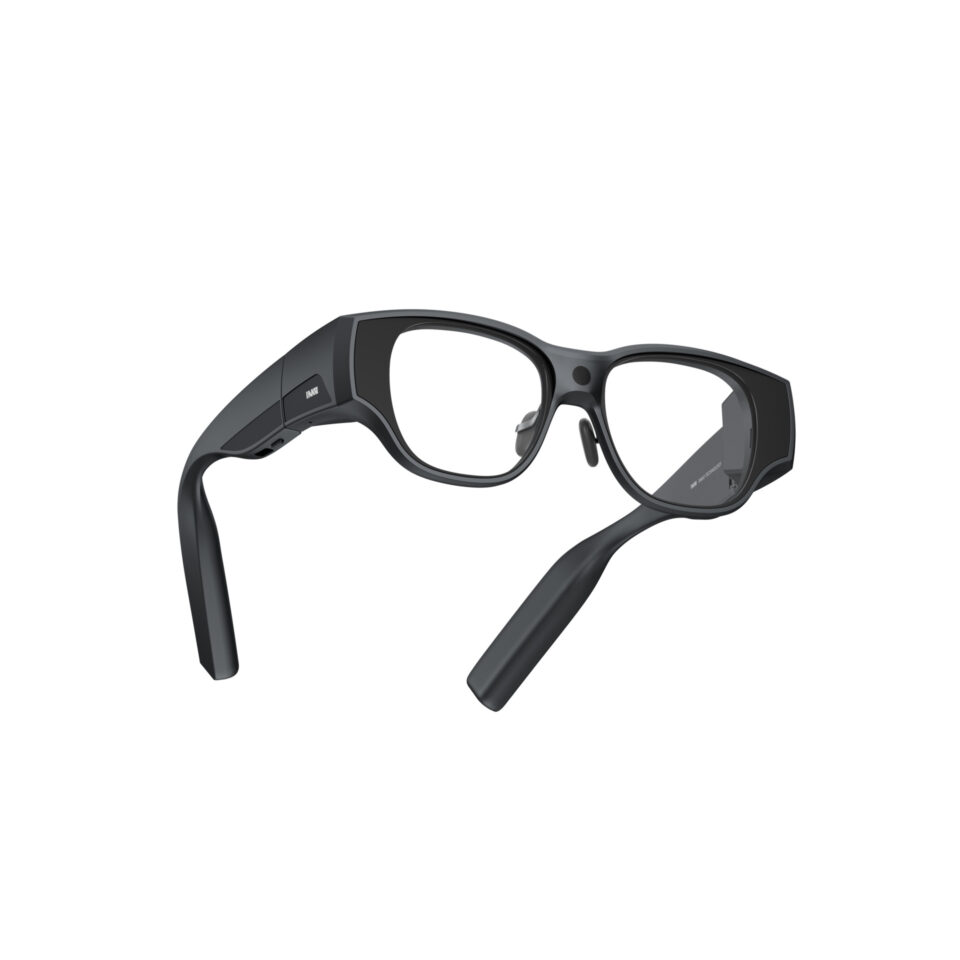
Display That Stands Out
Another major highlight is the display. The Air 3 uses a Sony micro-OLED panel, delivering full-color visuals in 1080p resolution with brightness up to 600 nits. The 36-degree field of view might be on the smaller side, but it covers 100% of the sRGB color spectrum — a big leap from competitors like Rokid Glasses, which still rely on basic monochrome overlays. On paper, the Air 3 looks like it can do almost everything people hoped Meta’s Ray-Ban smart glasses would handle, and then some.
A Virtual Screen on Your Face
Inmo has ambitious plans for what these glasses can do. Beyond AR overlays, the Air 3 is designed to run Android 14, complete with its own Google Play Store. That means you could theoretically use apps like X (Twitter), Snapchat, or even binge on TikTok directly through your glasses. One of the most compelling use cases, though, is treating the Air 3 as a personal cinema screen. Inmo claims the glasses simulate a massive 150-inch display, similar to what companies like BigScreen are attempting with VR, but in a lighter and more wearable form.
Hardware Under the Hood
To power all this, the Air 3 packs some serious hardware:
- Qualcomm Snapdragon XR processor
- 8GB of RAM
- 128GB of storage
- Support for up to three floating virtual screens
It also includes a 16MP ultrawide camera for photos and computer vision tasks, plus built-in mics and speakers for audio playback and voice assistant functionality.
The Big Questions
Of course, as with any ambitious AR device, two big questions remain:
- Battery life – The Air 3 has a 660mAh battery, but Inmo hasn’t shared real-world usage figures yet. Given the power demands of AR, this could make or break the device.
- Weight – Specs are still under wraps, but it’s safe to assume the Air 3 might be heavier than slimmer competitors from Meta or Rokid. Comfort will be key if Inmo wants users wearing these for hours at a time.
Price and Launch
The Inmo Air 3 Kickstarter campaign officially launches on September 15, with retail pricing set at $899. That puts it firmly in premium territory, but still below some high-end AR headsets on the market.
Whether the Air 3 delivers on all of its promises remains to be seen. But one thing’s for sure: Inmo is asking the right question — how do we make smart glasses actually work for everyday users? Even if some of the ideas don’t pan out, the company’s bold mix of UI innovation and display tech makes the Air 3 one of the most interesting AR experiments of 2025.