
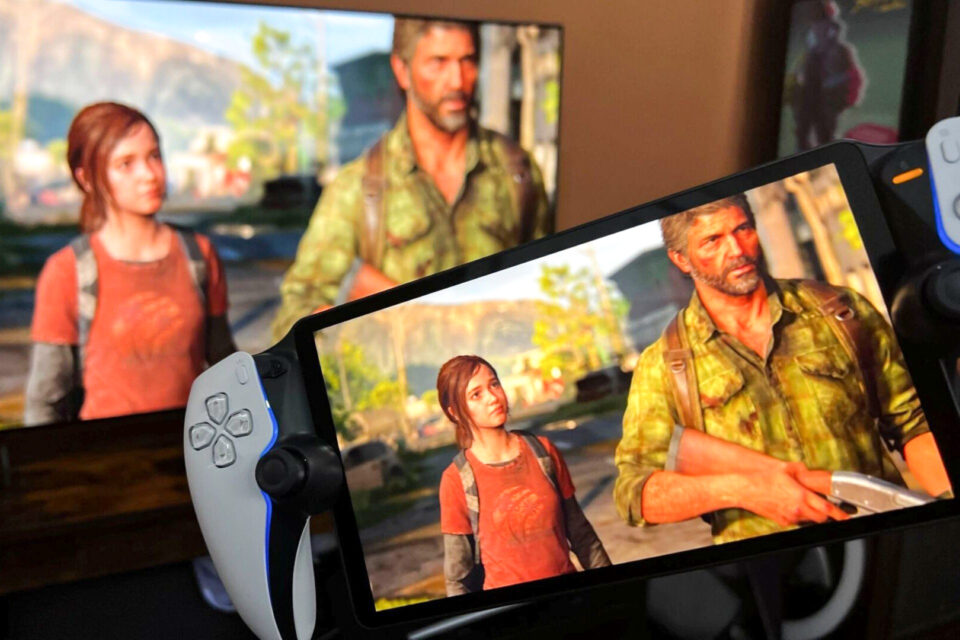
When Sony first revealed the PlayStation Portal in late 2023, it sparked curiosity but also disappointment. Fans expected a rebirth of the PlayStation Portable era — a true handheld console that could rival the Nintendo Switch or Steam Deck. Instead, they got a device that simply streamed games from the PS5 to an 8-inch screen.
It was sleek. It was futuristic. But it wasn’t independent. The excitement surrounding the words “PlayStation handheld” quickly fizzled out as gamers realized that without a PS5 and a stable Wi-Fi connection, the Portal was practically useless.
Fast forward to 2025, and Sony has rewritten that story.
After months of anticipation, a free update has finally arrived, transforming the PlayStation Portal from a companion device into a fully functional cloud gaming handheld. It’s not just an accessory anymore — it’s the start of a whole new chapter for portable gaming under the PlayStation brand.
Cloud Freedom: A Whole New Level of Play
This isn’t just a minor update — it’s a major evolution.
Sony’s new firmware now allows the PlayStation Portal to stream games directly from the cloud, bypassing the need for a PS5 entirely. That means you can finally pick up and play anywhere, anytime, without being tethered to your living room console.
The device, which looks like a DualSense controller with a tablet fused in between, can now stream at 1080p resolution with buttery-smooth frame rates. It also supports wireless headsets and earbuds for rich 3D spatial audio, giving players that full console feel — now in the palm of their hands.
Of course, this freedom comes with a catch: you’ll need a PlayStation Plus Premium subscription. At $18 per month or $160 a year, the plan is still cheaper than Xbox’s Game Pass Ultimate (which recently jumped to $30/month). But unlike Xbox, Sony’s plan doesn’t give instant access to every new game at launch.
Still, the growing library is impressive. Current titles include Astro Bot, Final Fantasy VII Rebirth, Borderlands 4, and Ghost of Yōtei, alongside legendary classics like The Last of Us Part II Remastered and Silent Hill 2. This expansion marks one of the most significant leaps forward in Sony’s cloud gaming ecosystem to date.
A Smarter, Sleeker Interface
Alongside cloud play, the update introduces a complete UI overhaul that feels like a peek into Sony’s future.
The new interface features three core tabs — Remote Play, Cloud Streaming, and Game Search — making it effortless to jump between modes or discover new games. You can now buy, browse, and manage titles directly from the Portal, no PS5 or phone required.
And Sony didn’t stop there. A revamped quick menu accessed via the PS button now lets you adjust visual settings, tweak stream quality, or even resize text for improved readability on the smaller display. It’s small details like these that show Sony’s dedication to refining not just the hardware, but the overall user experience.
This streamlined interface doesn’t just improve the Portal — it may also serve as the foundation for Sony’s next generation of handheld devices.
Behind the Curtain: What This Means for PlayStation’s Future
The update signals something much bigger than just a feature drop. Insiders believe Sony is testing the waters for a full-fledged handheld console.
Industry leakers — including Moore’s Law Is Dead, a reliable AMD insider — claim that Sony is working on a next-gen hybrid handheld that could dock to a TV, boosting performance through enhanced thermals and fan systems, similar to what we expect from the Nintendo Switch 2.
It’s also rumored that the new hardware will harness AI-driven upscaling technology, such as AMD’s FidelityFX Super Resolution 4 (FSR4). This would allow for stunning visuals with lower power draw — a key step for handheld design.
If those reports hold true, then the Portal’s current interface and cloud architecture could very well be Sony’s testbed for the next generation of mobile gaming.
In essence, this update doesn’t just make the Portal better — it quietly lays the groundwork for PlayStation’s long-term handheld revival.
Competing in a New Era of Handhelds
It’s impossible to ignore how this shift positions Sony against its competitors.
Microsoft is still struggling to optimize Windows for handheld use — even the Asus ROG Ally X and Lenovo Legion Go face constant performance and sleep mode issues. Meanwhile, Sony’s Portal, with its new streamlined interface, feels like the first step toward a true console experience in portable form.
It’s cleaner, faster, and more intuitive than anything currently offered by Windows-based handhelds. That level of polish shows that Sony isn’t just experimenting — it’s listening.
Why It Matters
For years, handheld gaming fans have begged for a modern PlayStation Portable revival. And while the Portal still isn’t quite that, it’s inching closer to fulfilling that dream. The update proves that Sony sees value in the handheld market once again — not just as a nostalgic experiment, but as a legitimate extension of its ecosystem.
This update doesn’t only change what the Portal is; it changes what it represents.
It’s a signal — a promise — that Sony hasn’t abandoned portable gaming, but rather, it’s learning how to do it smarter this time.
And if this is just the beginning, the future of PlayStation handhelds might be far more exciting than anyone expected.
Final Thoughts
The PlayStation Portal may have launched as a misunderstood companion device, but this new update reshapes it into something much more meaningful. It’s a glimpse at what’s next for Sony — a portable, powerful, cloud-connected future.
No longer tethered to a PS5, the Portal now stands tall as its own device, offering console-quality gaming wherever you are. And while it may not replace your PS5 just yet, it’s starting to feel less like an experiment — and more like a revolution in motion.
So, is the PlayStation Portal finally worth your attention?
For the first time since its release — absolutely.